
Island Paradise
Western Fiji
Territory: Western Fiji
Total Voyage Duration: 9 Days
This is the story of a brief sojourn in western Fiji. A family of 7’s magical escape into a true tropical paradise.
There are some places in the world where time seems to slow, where nature speaks in colors too rich for words, and where the ocean feels like it’s telling stories. Western Fiji is one of them.
The owners of an XF60 took her from New Zealand to Fiji, completing the passage in 40 hours. In Fiji they enjoyed several weeks onboard exploring, before berthing in Denarau Marina and returning home for a time, during which they kindly offered their friends time to use the boat – this is where our story begins.
From the moment we landed at Nadi airport, Fiji began to work its magic. The short flight had already teased us with glimpses of the world below: turquoise lagoons wrapped around remote, sandy islands, stitched together by vivid reefs that seemed to stretch forever. Stepping out into the warm, humid air, we were greeted by a sunset so intense it painted half the sky in radiant orange.
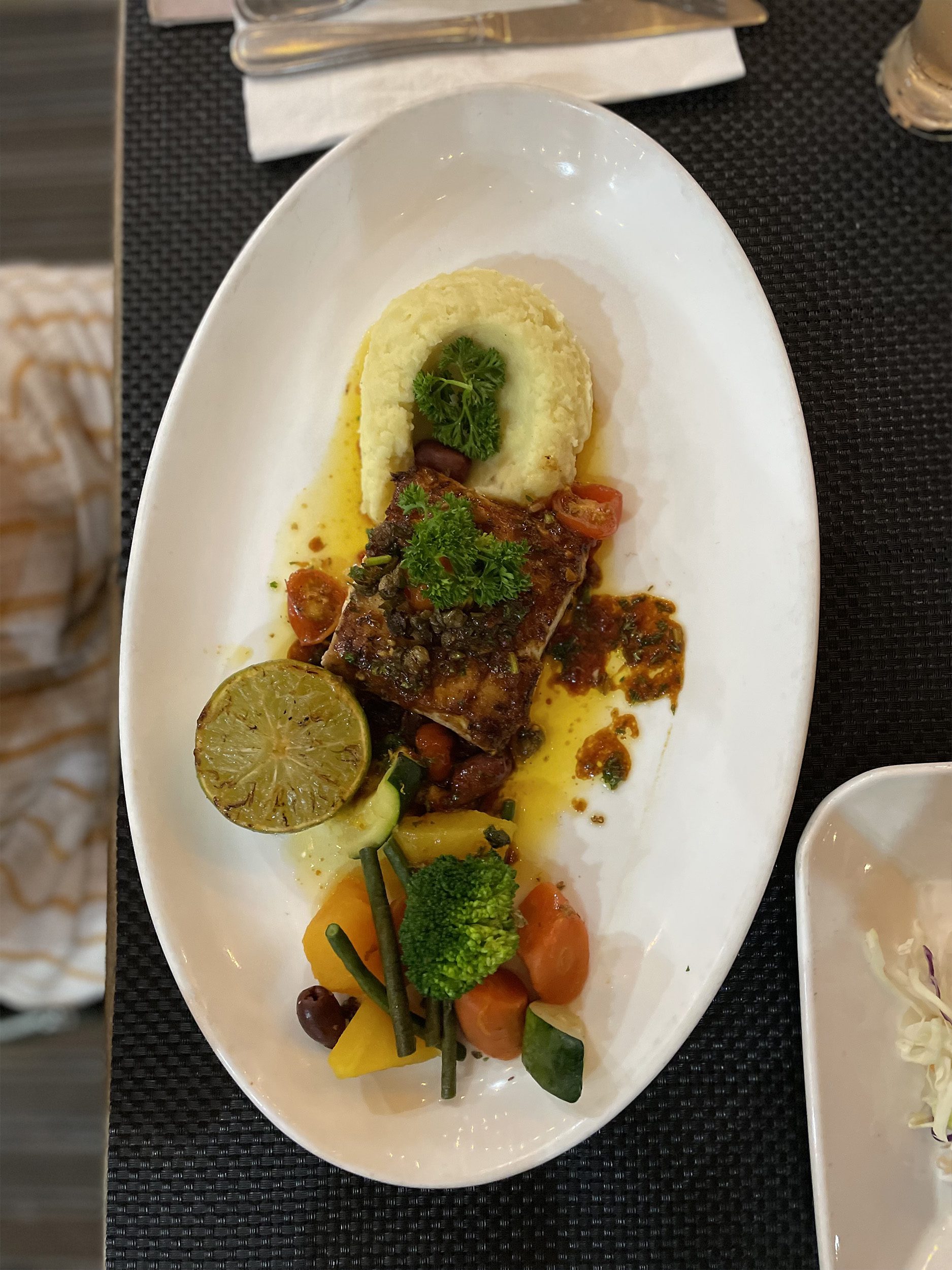
That first evening, we settled into the rhythm of island life with dinner at one of Denarau Marina’s waterfront restaurants. The local seafood was rich with flavour, and we were welcomed with Fiji’s famously warm “Bula” spirit – a cheerful hospitality that would accompany us throughout our journey.
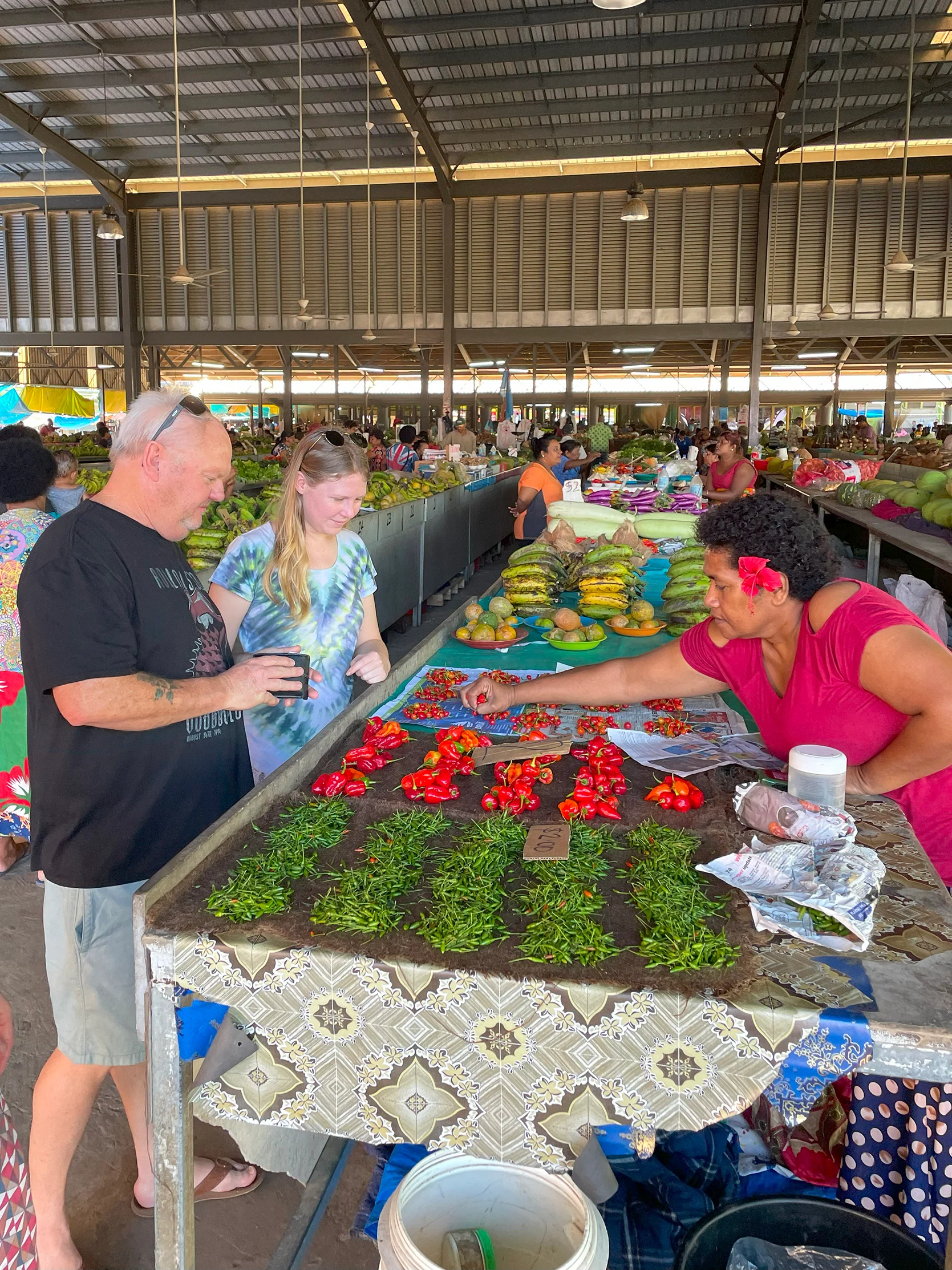
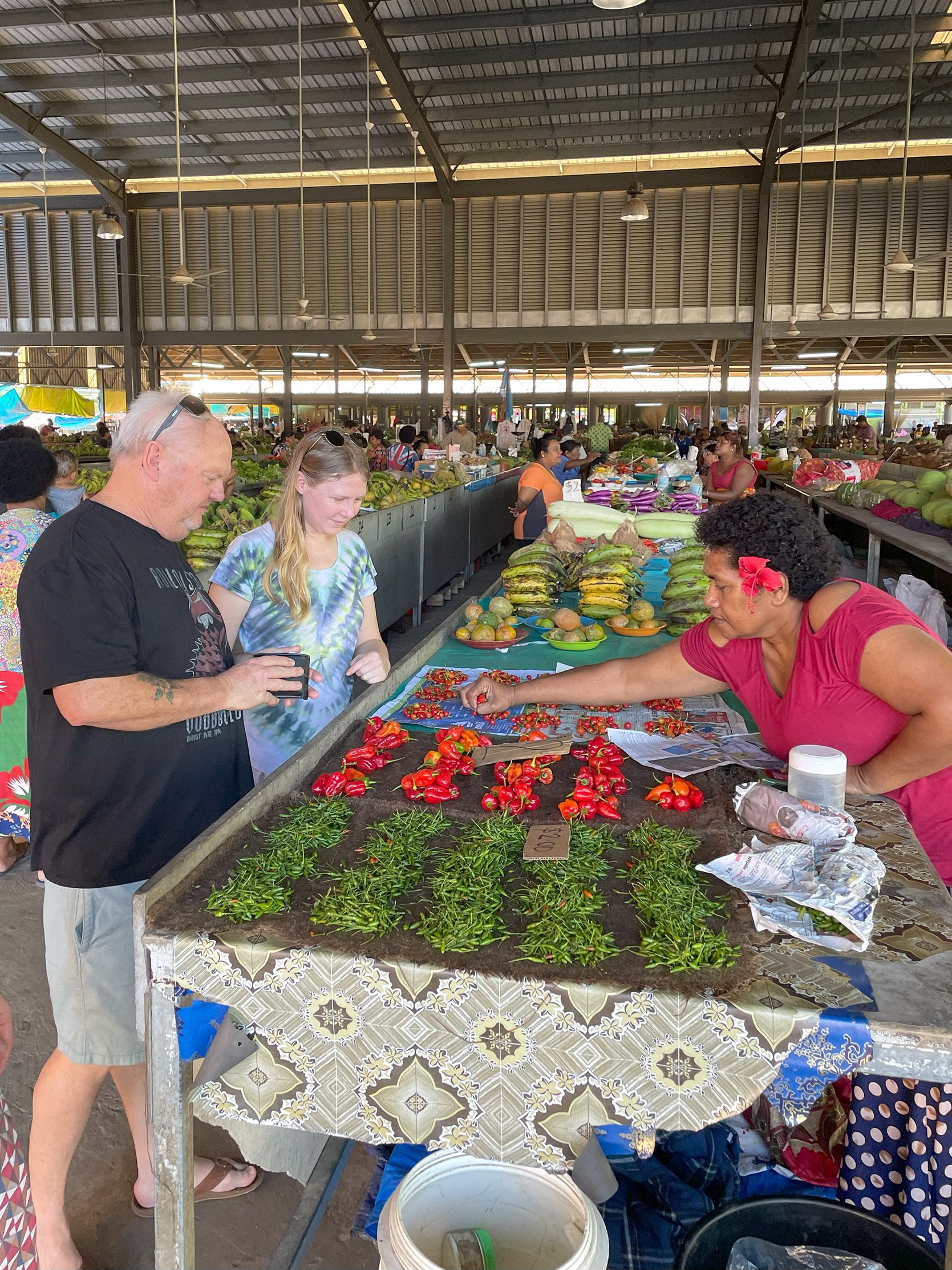
The next morning began with the surprisingly joyful task of provisioning. A visit to the local markets was a cultural experience in itself: stall after stall piled high with freshly harvested vegetables, juicy tropical fruits, fragrant herbs and spices, coconuts, chilies, and more – each handed over with a broad Fijian smile. Toward the back, the kava market makes both an interesting and important stop, to stock up on the traditional offering for local chiefs known as sevusevu. Supermarkets nearby filled in any remaining gaps with imported comforts and pantry essentials.
By mid-morning, we were ready. With Elyse, our youngest explorer, bubbling with excitement, we untied from the dock and set our course toward the Yasawa Islands – our journey into paradise had officially begun.
Our first destination was the southern tip of Waya Island, where the Yasawa chain begins. Even after a morning of provisioning, we reached it easily – one of the many luxuries of our boat’s speed. While slower cruisers would still be trudging north, we were already easing into island time, playing along the way with a pod of dolphins, darting around the bows.
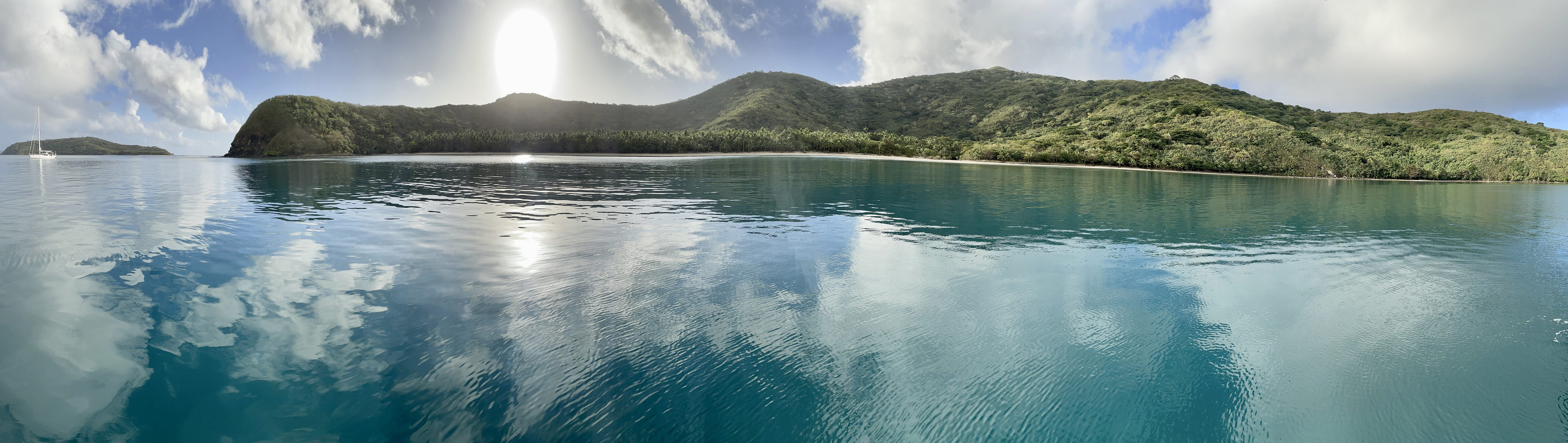
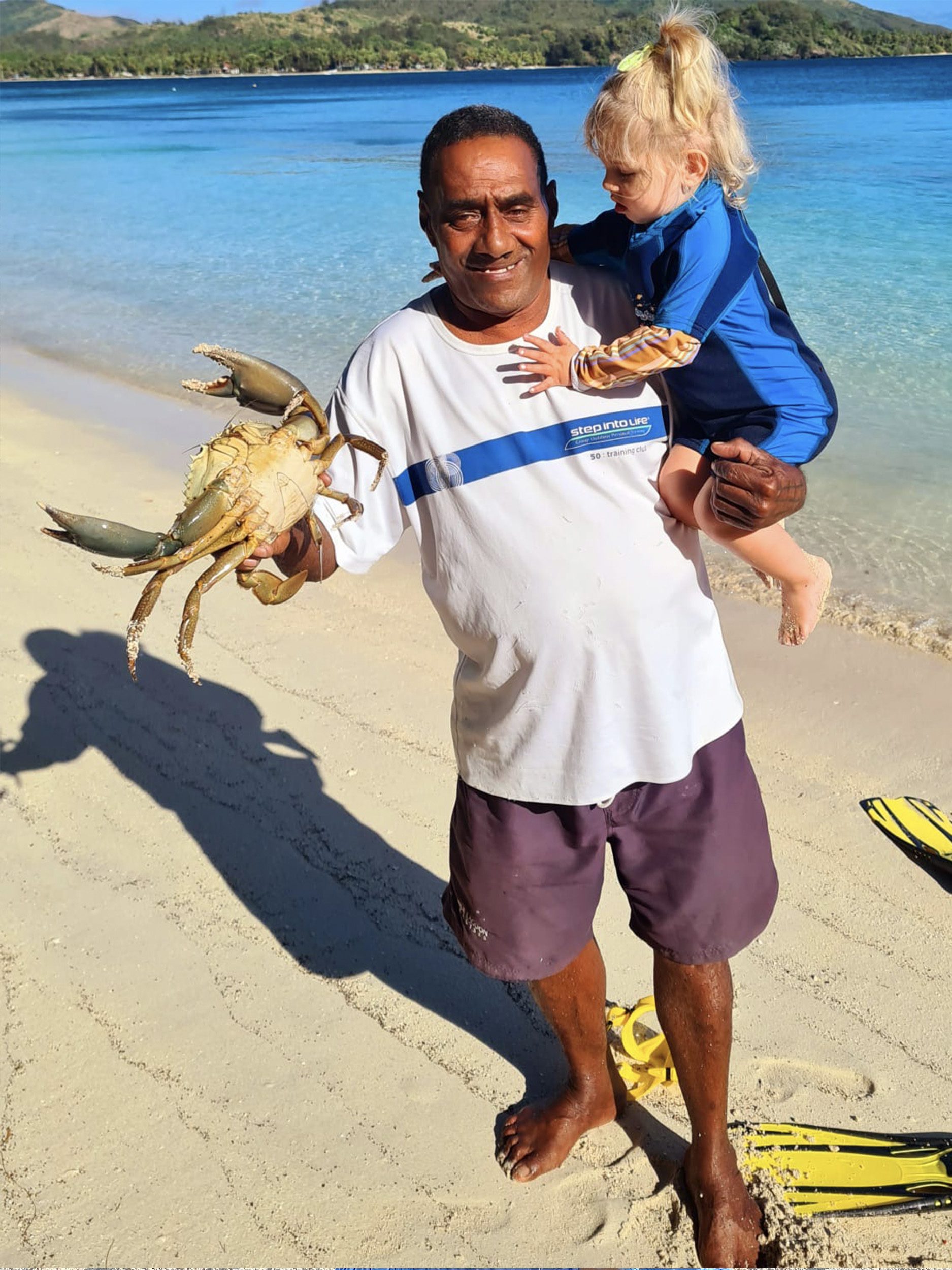
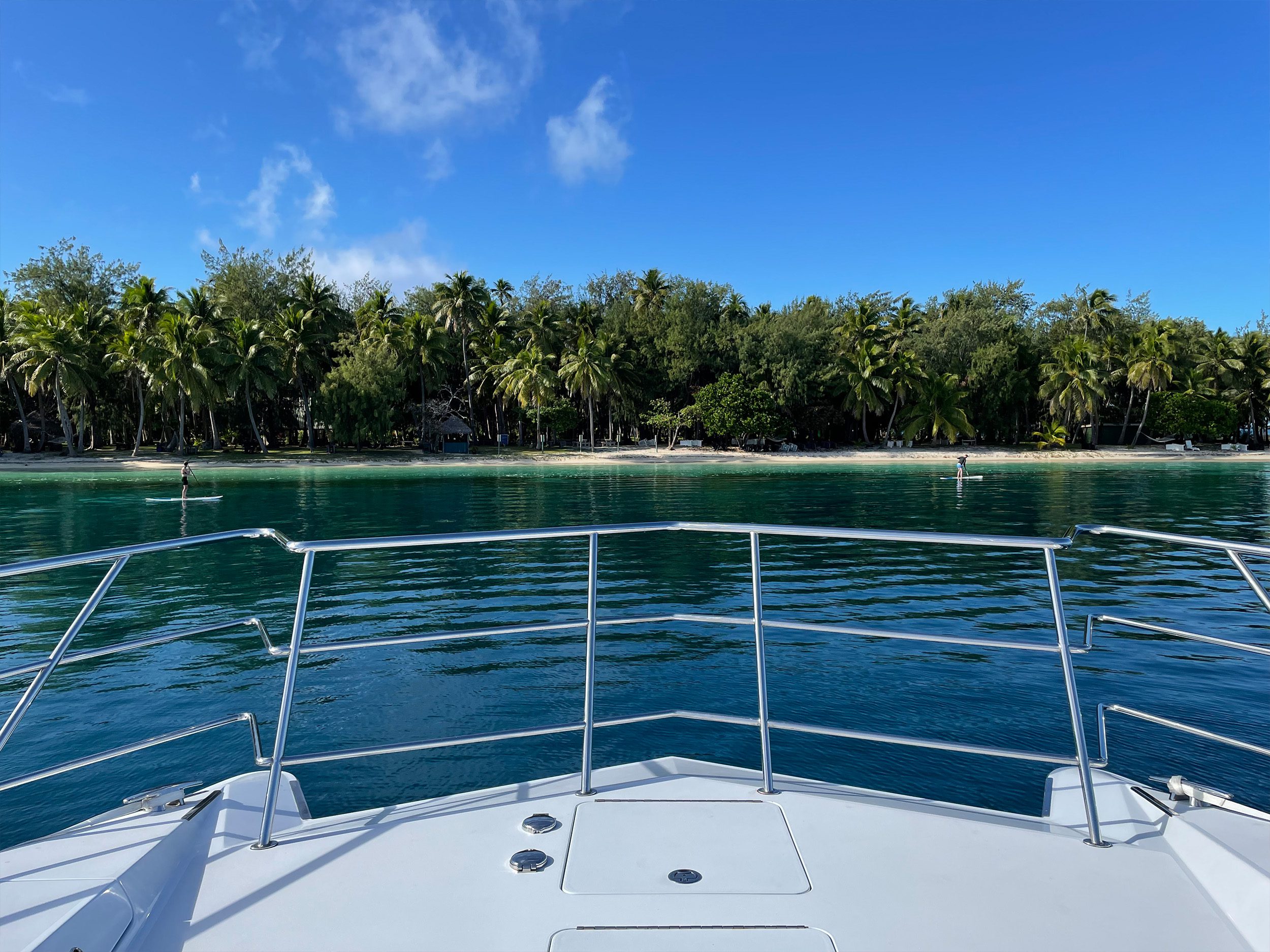
We dropped anchor in a well-protected bay fringed by coral reefs and overlooked by a small tribal village nestled beneath rugged green hills. A golden beach curved gently along the shoreline, and we hopped in the tender to head ashore, bringing with us the traditional gifts of sevusevu – a sign of respect and gratitude to the local chief when staying overnight in their bay.
Carrying natural cloth bags with kava root for the chief and elders, and along with soaps, toothbrushes, kids’ clothing, school supplies, and fishing gear for the village, we stepped barefoot onto the sand. The village felt both timeless and welcoming, and after a brief walk we were seated cross-legged before the chief and village elders. A short but meaningful ceremony followed, where we were given their blessing to stay in the bay and their guidance for exploring their waters.
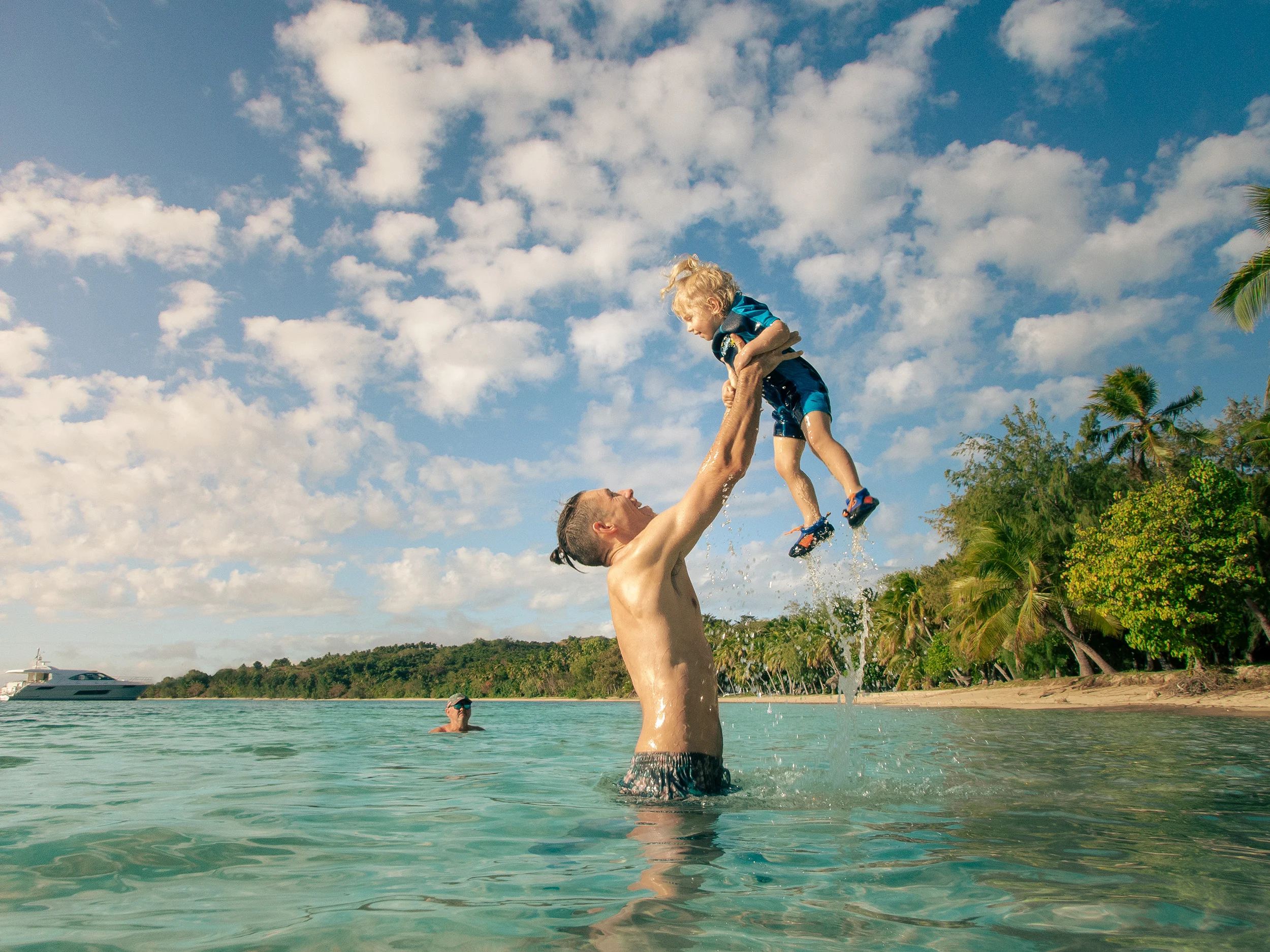
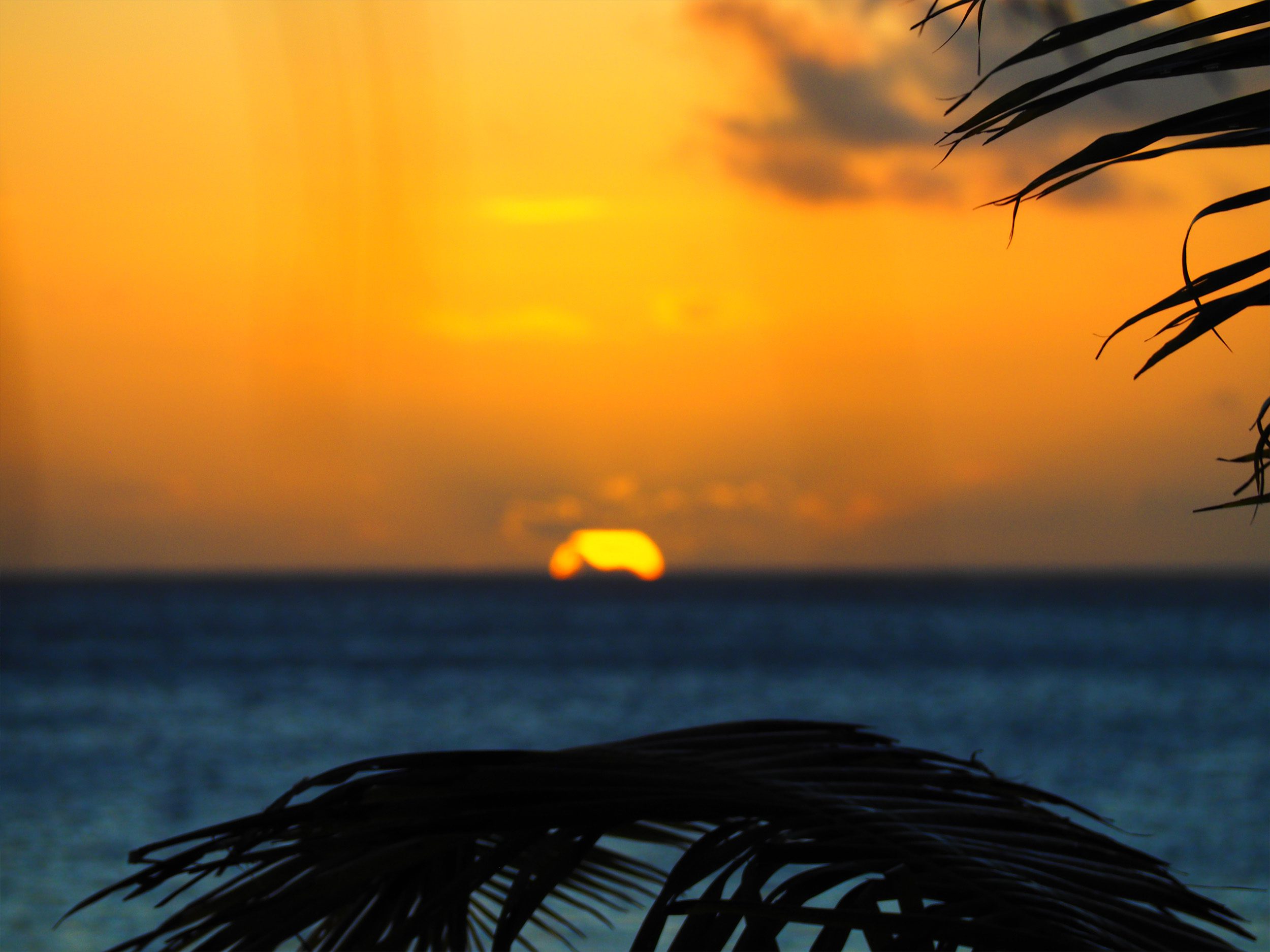
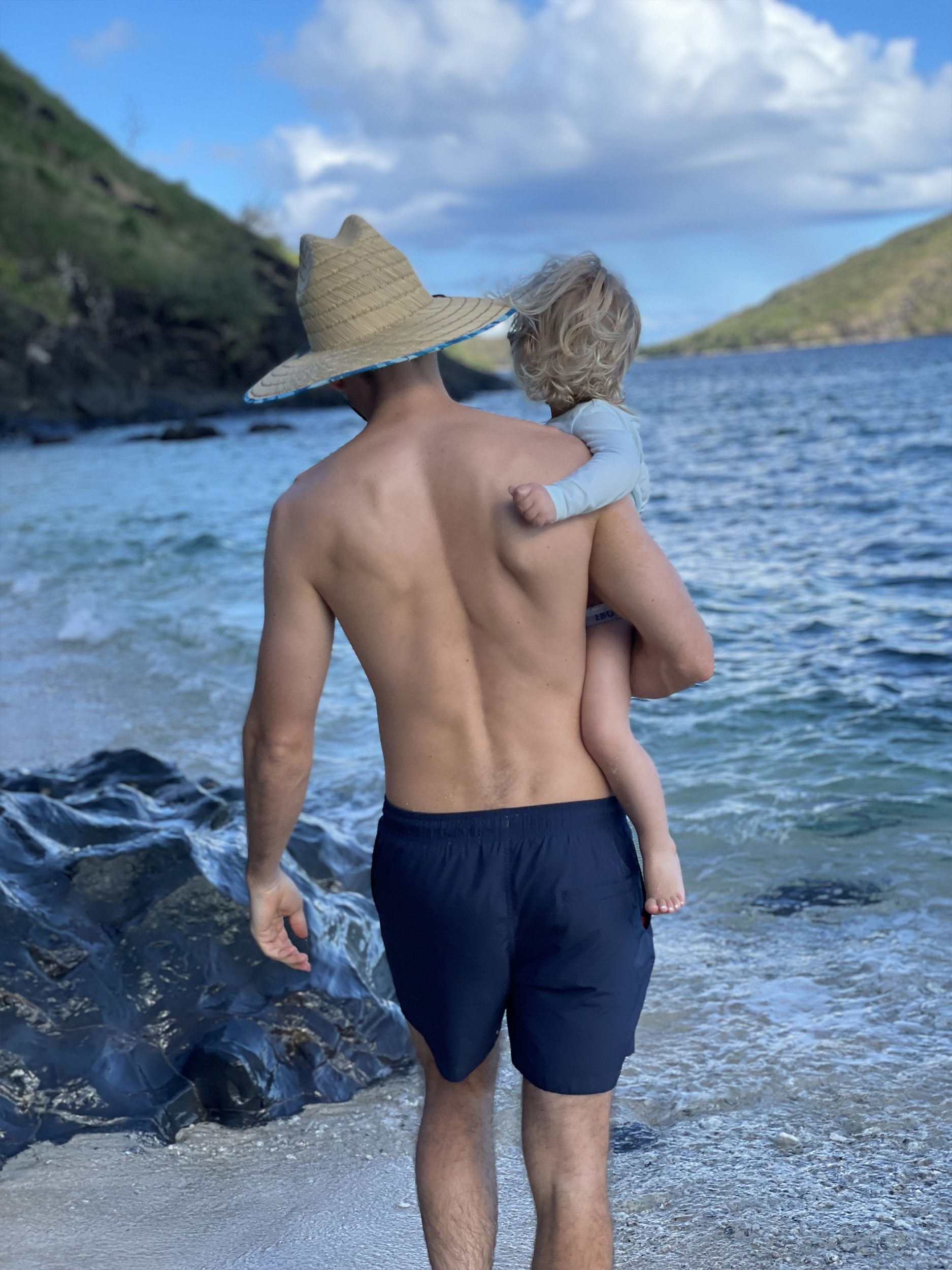
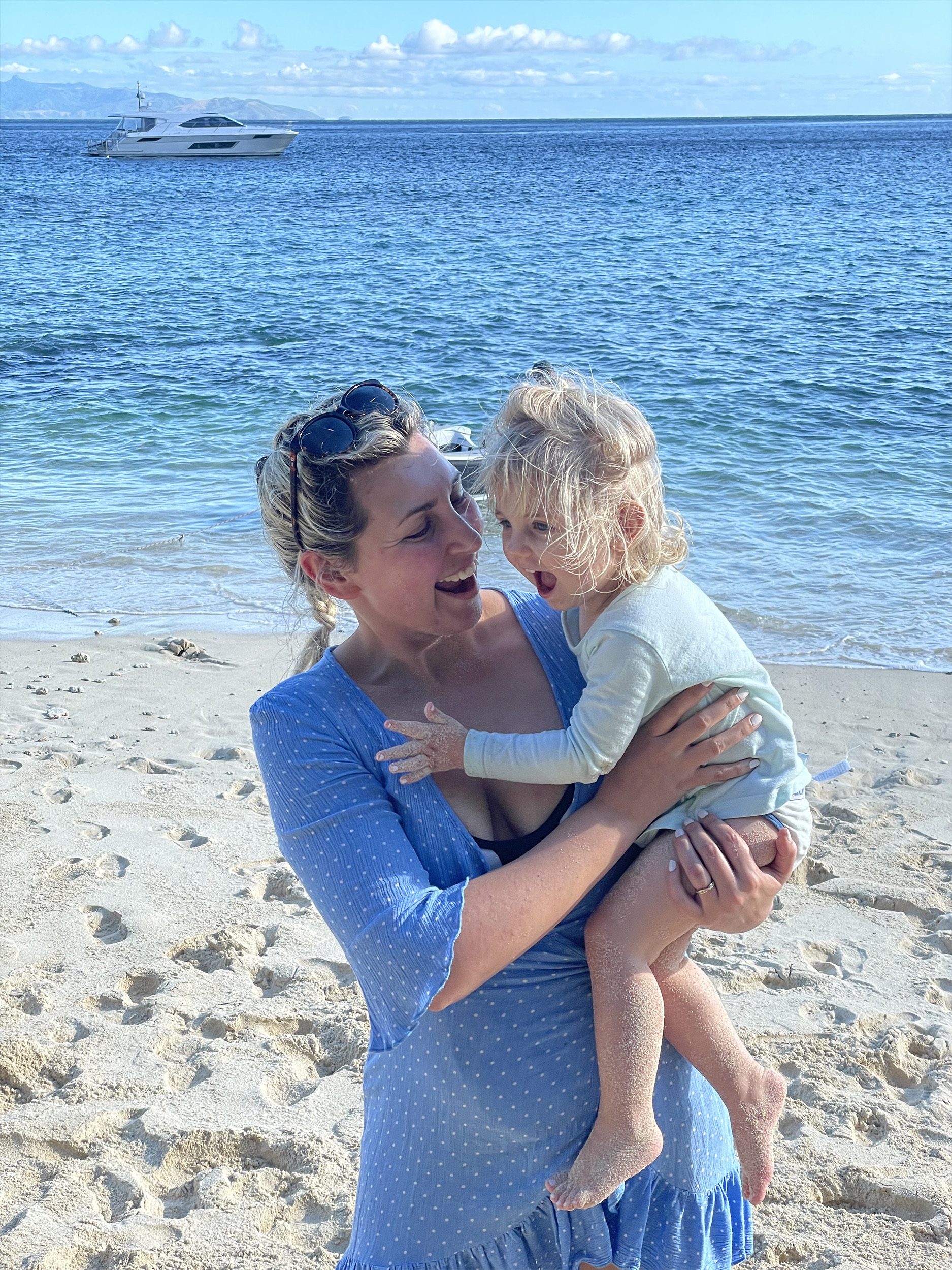
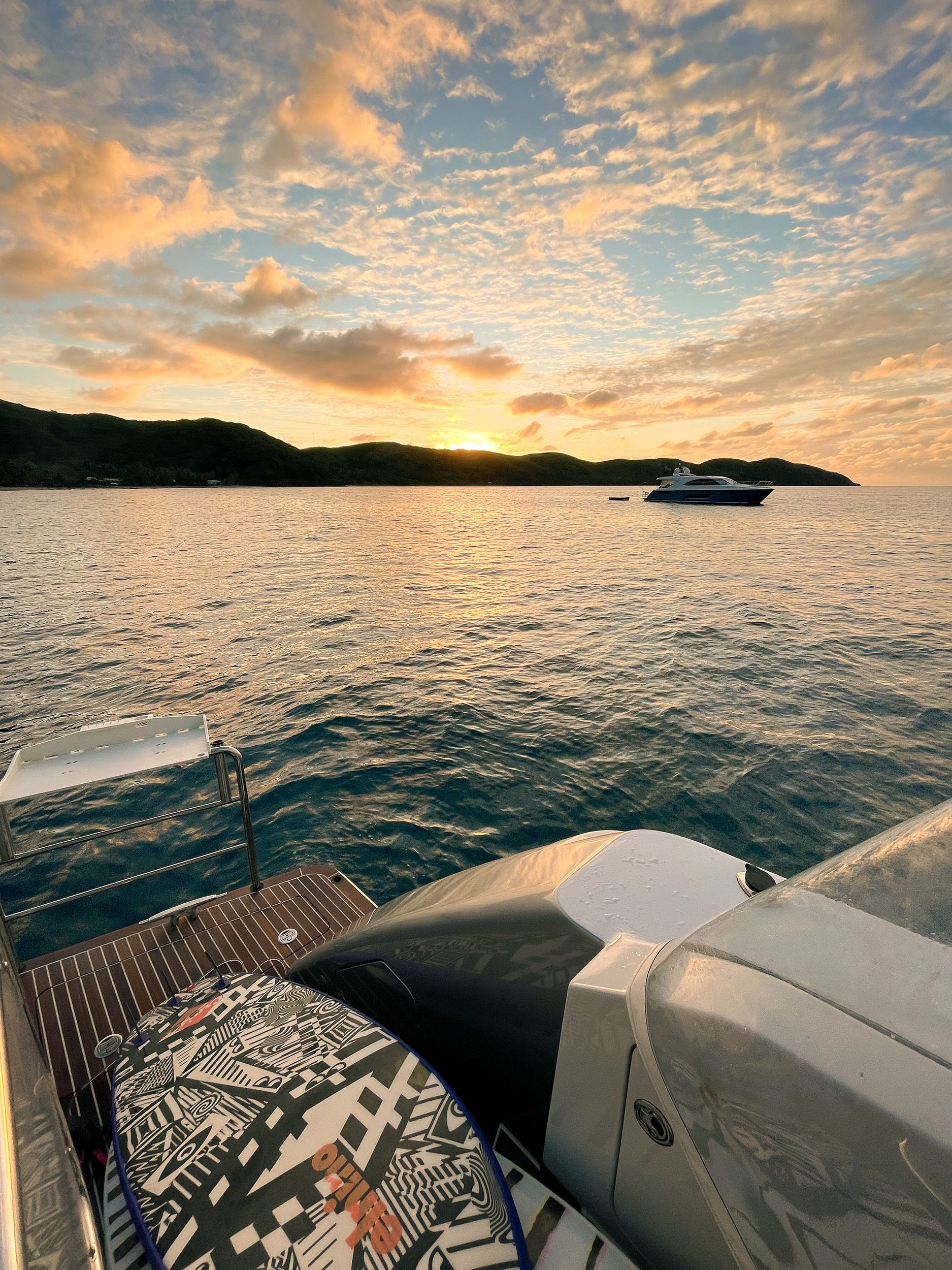
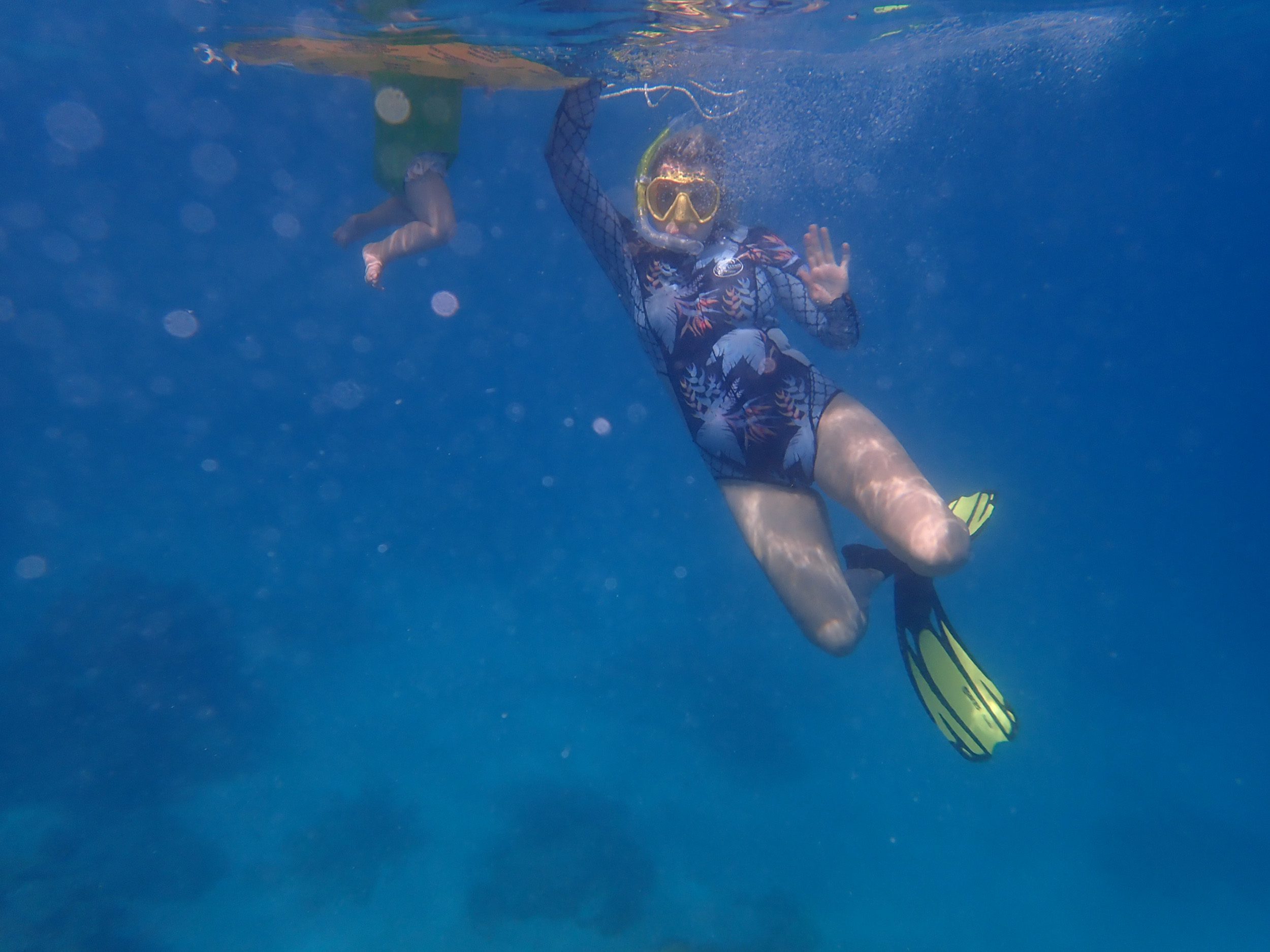
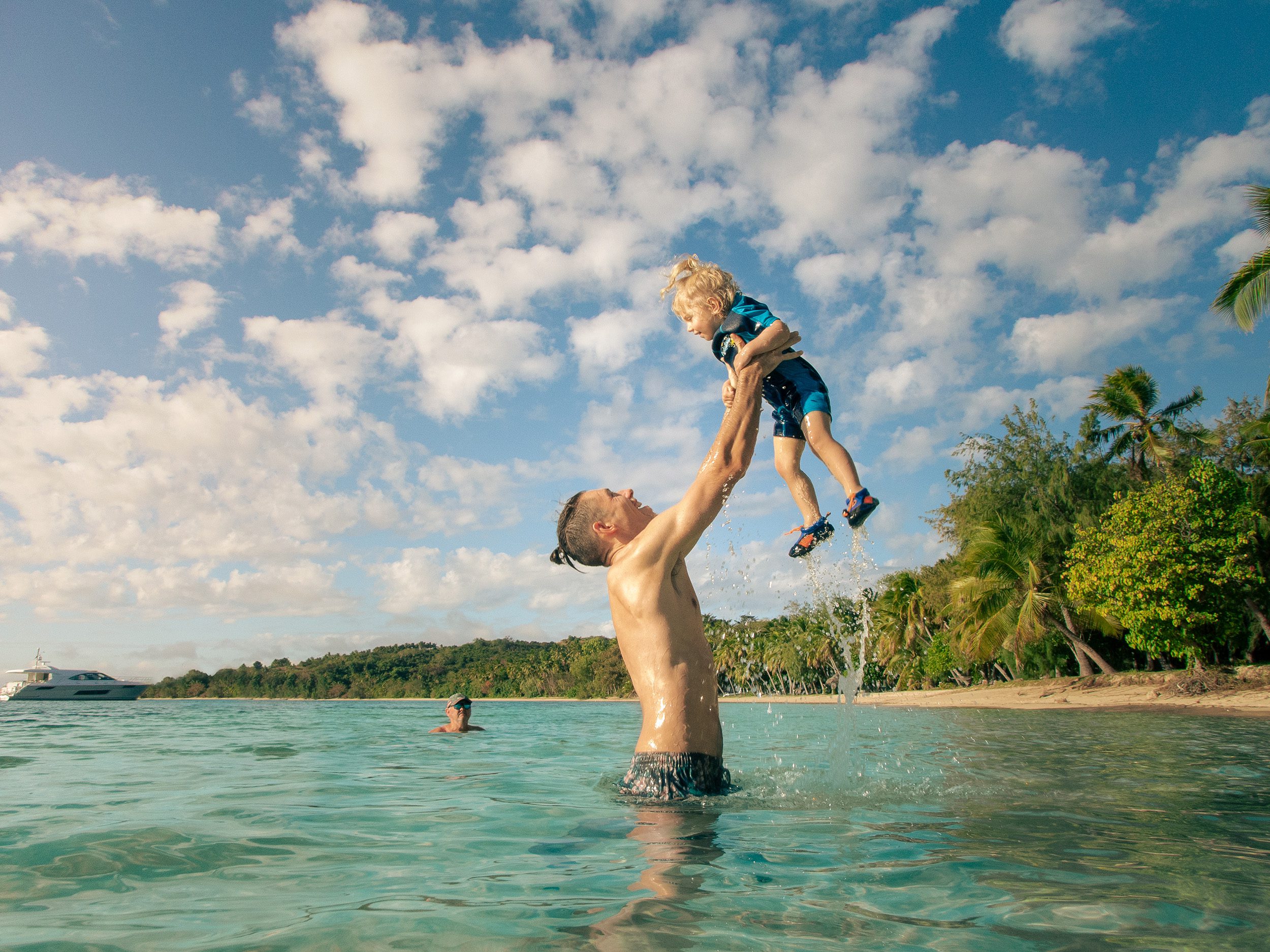
That afternoon, back on the boat, the real magic began, snorkelling and swimming in the 27°C+ water. For young Elyse, it was her first time swimming in the tropical sea. She sat on the lowered swim platform, just 10 centimetres beneath the surface, giggling as she splashed and watched tiny fish dart by her feet. As night fell the sky lit orange once more, and we sent the drone up to watch as the sun slipped behind the last tall hill.
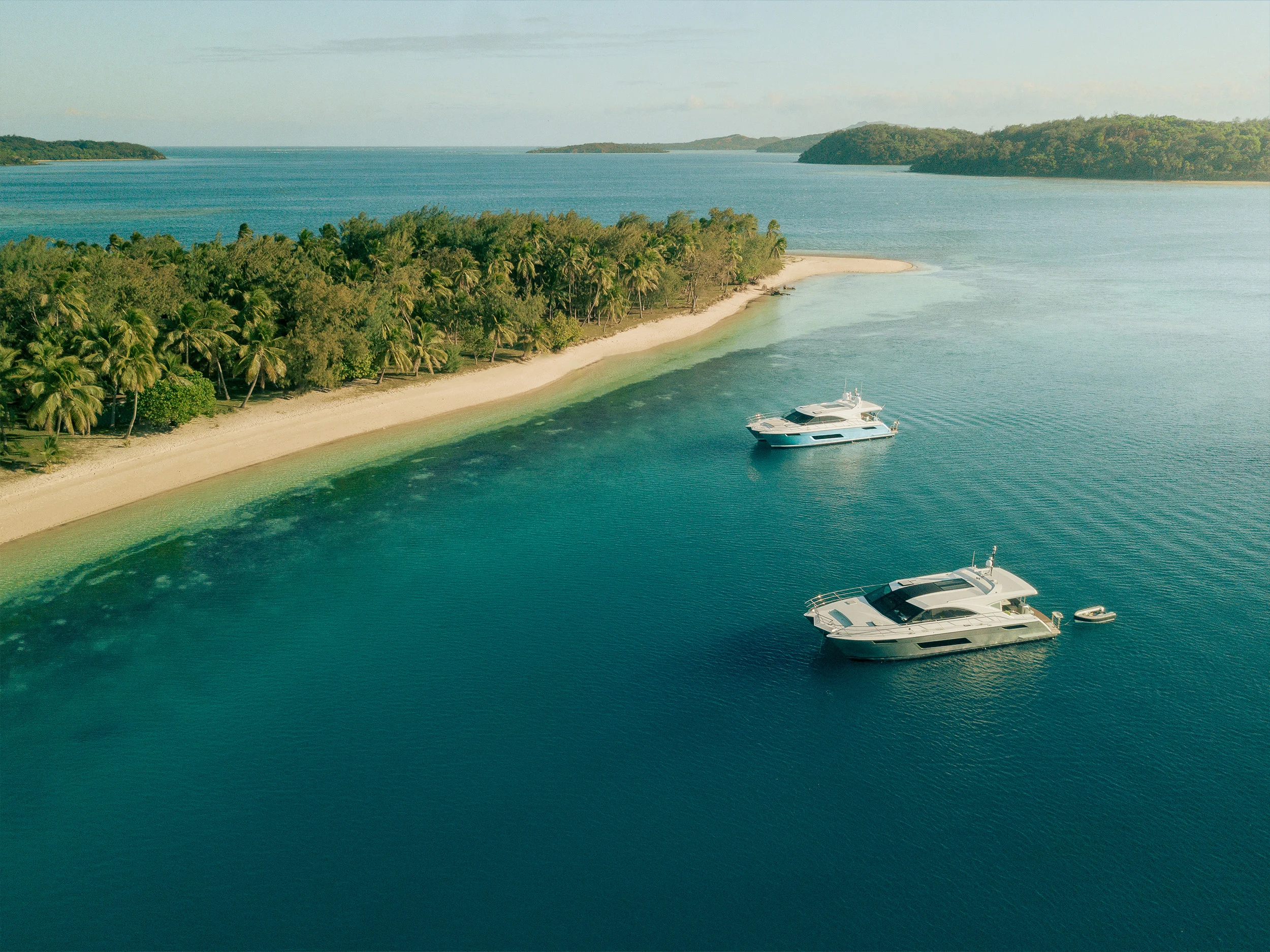
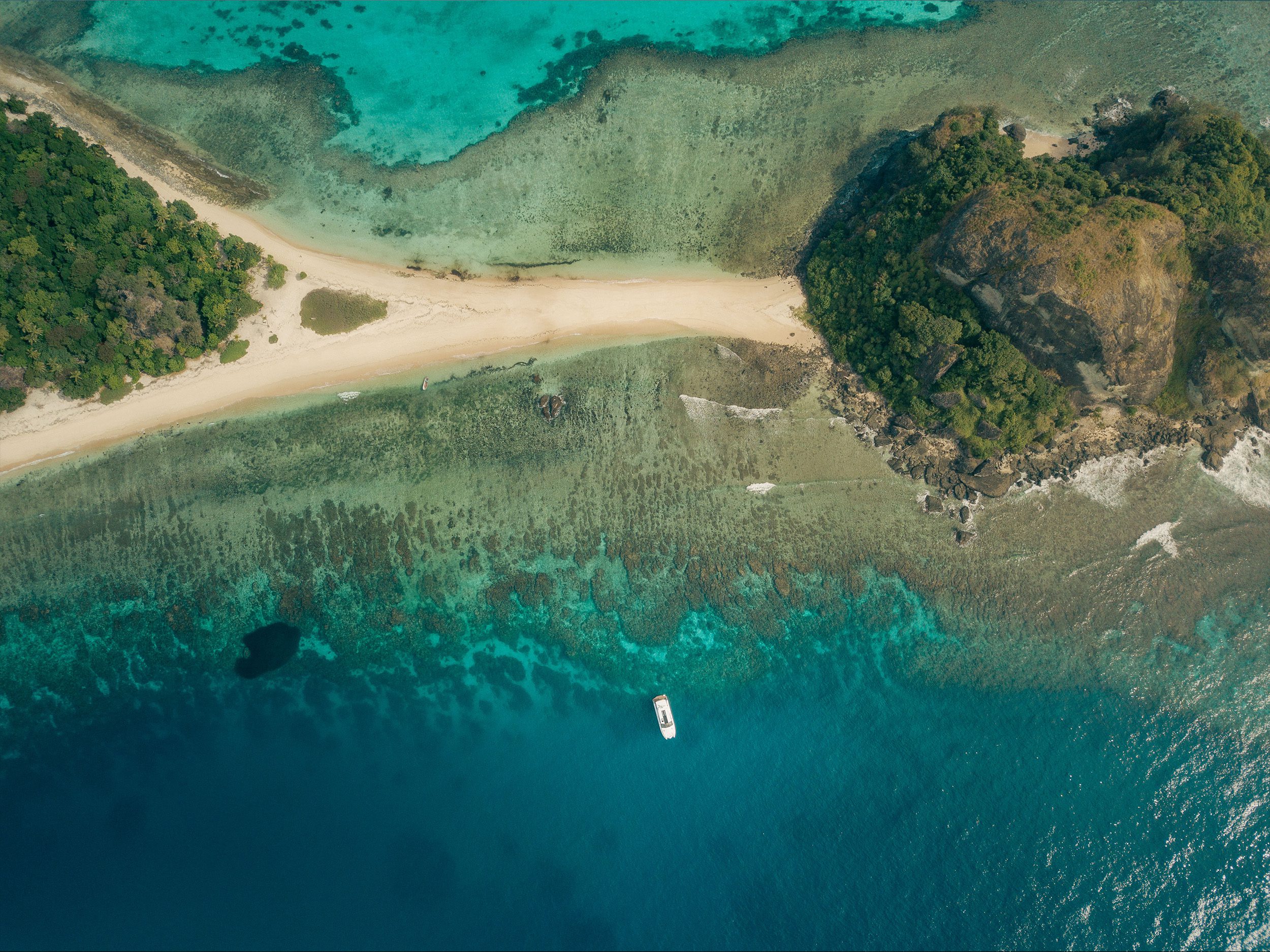
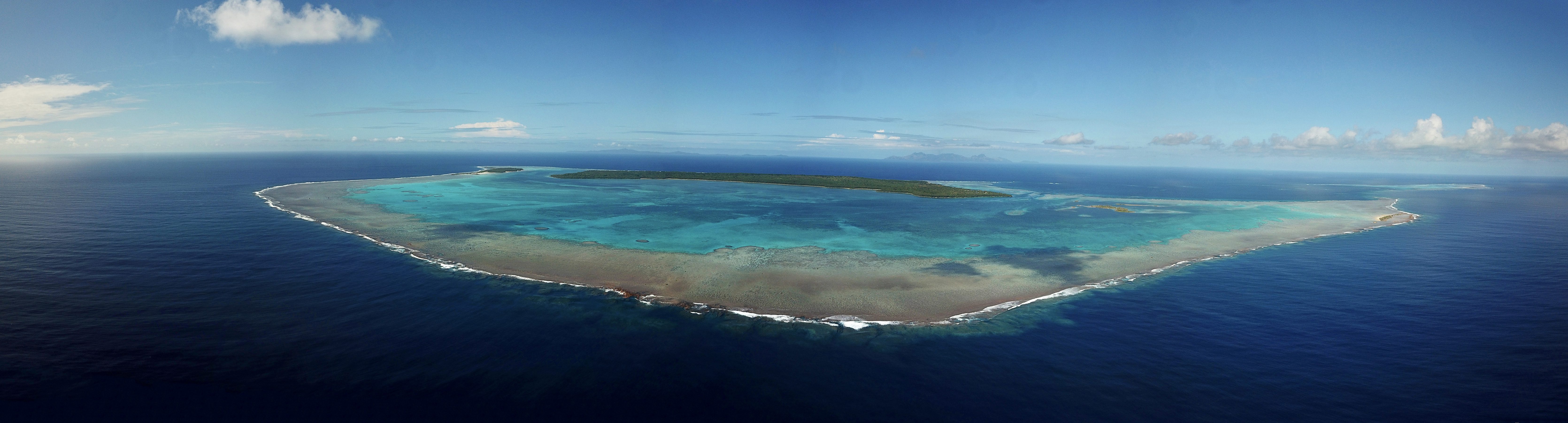
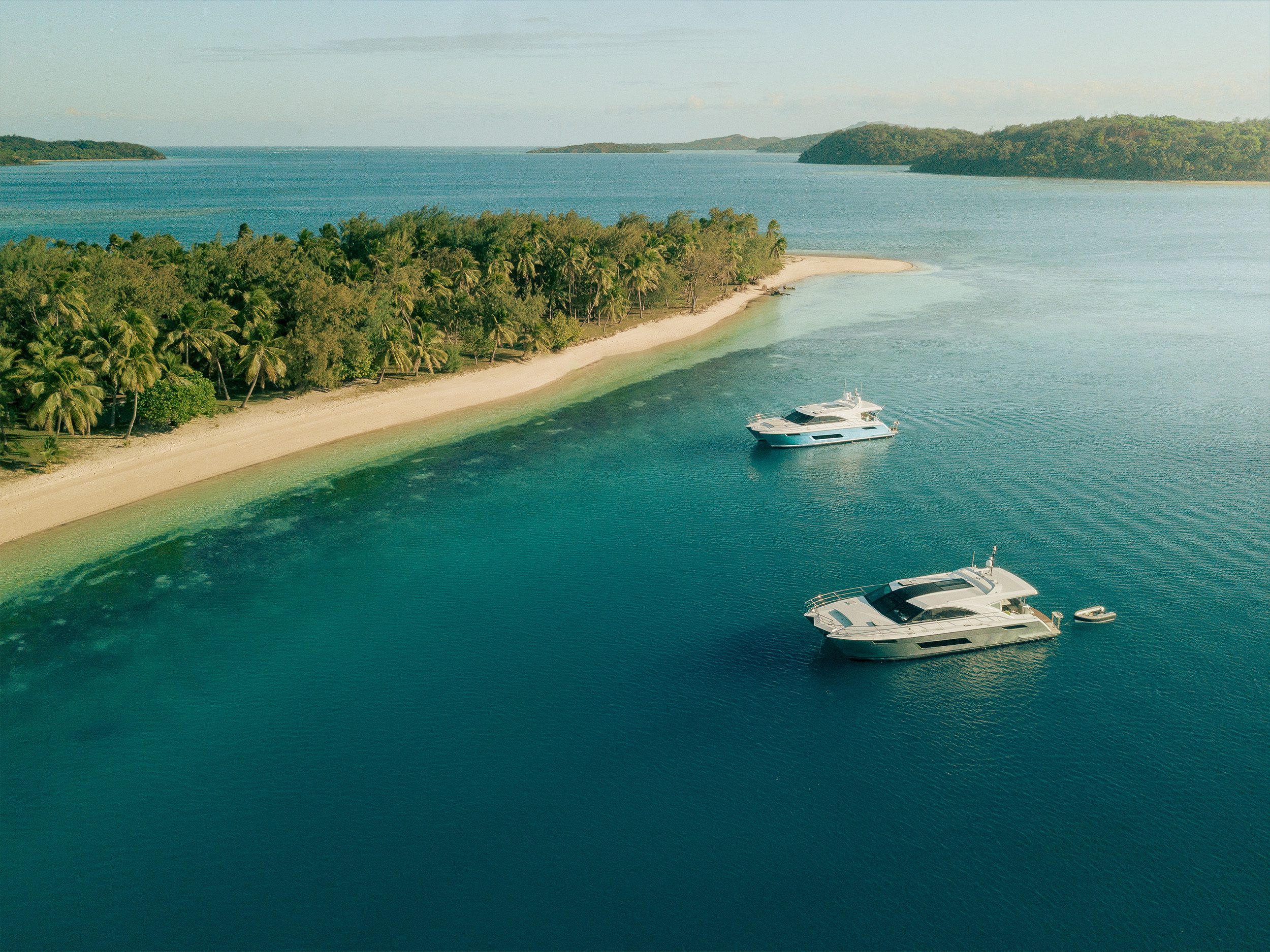
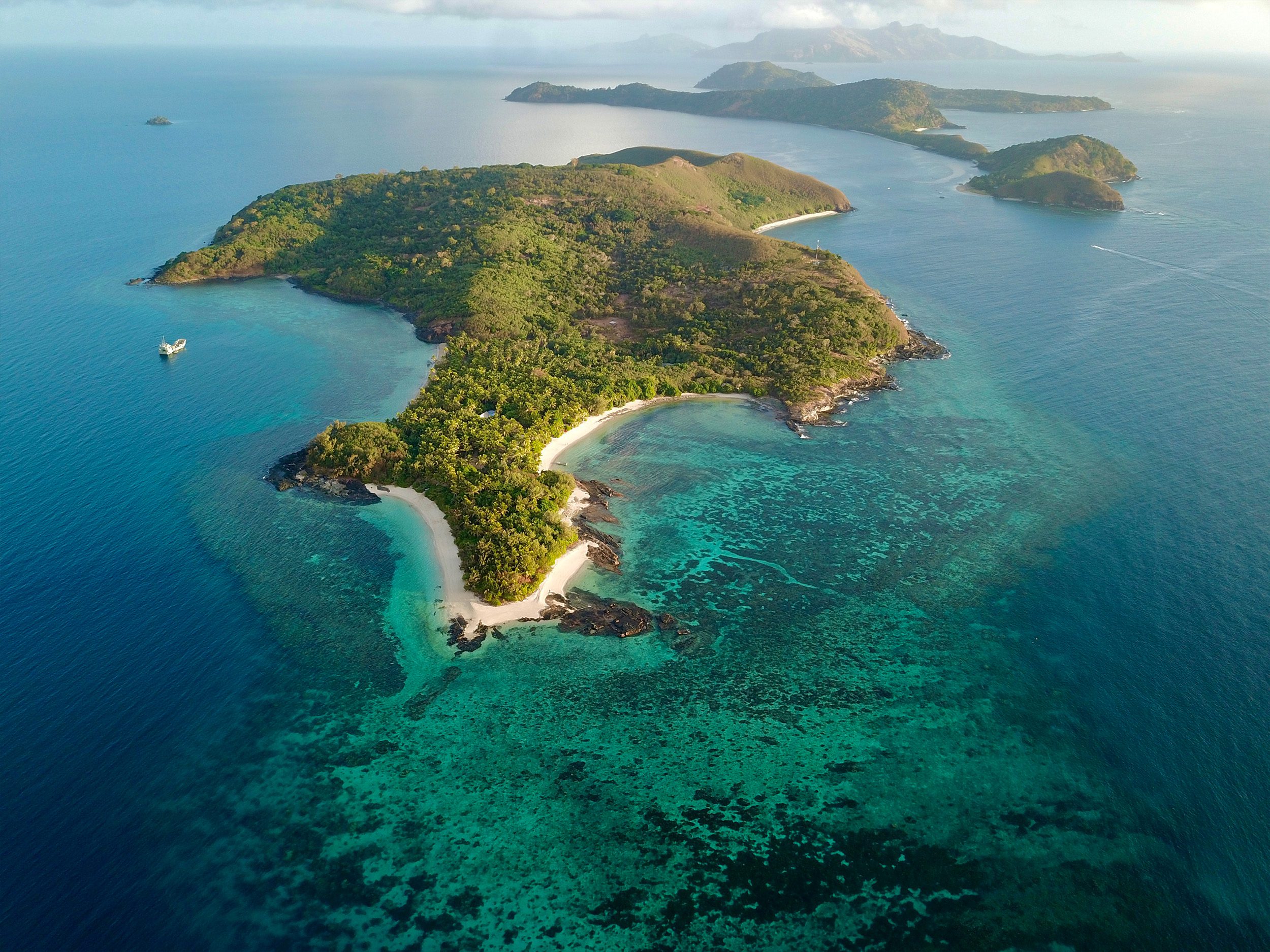
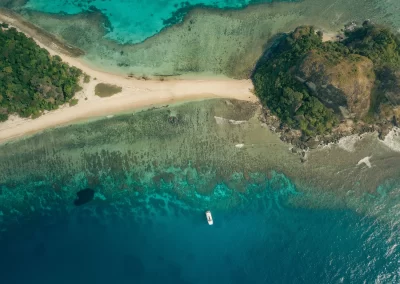
The next morning we headed west – a quick and easy trip at 35 knots – to explore Viwa Island and the outer reef, the western most land of Fiji. Viwa Island is a long, low, flat strip of sand that rises mere meters above the ocean, thick with palm trees and surrounded by a shallow lagoon reef. But beyond that reef, the world drops away – a dramatic two-and-a-half-kilometre plunge into the North Fiji Basin. Viwa makes for a stunning vista to cruise along, with bright tropical colours of palm trees, sand and reef flowing into the deep blue and white of the open ocean.
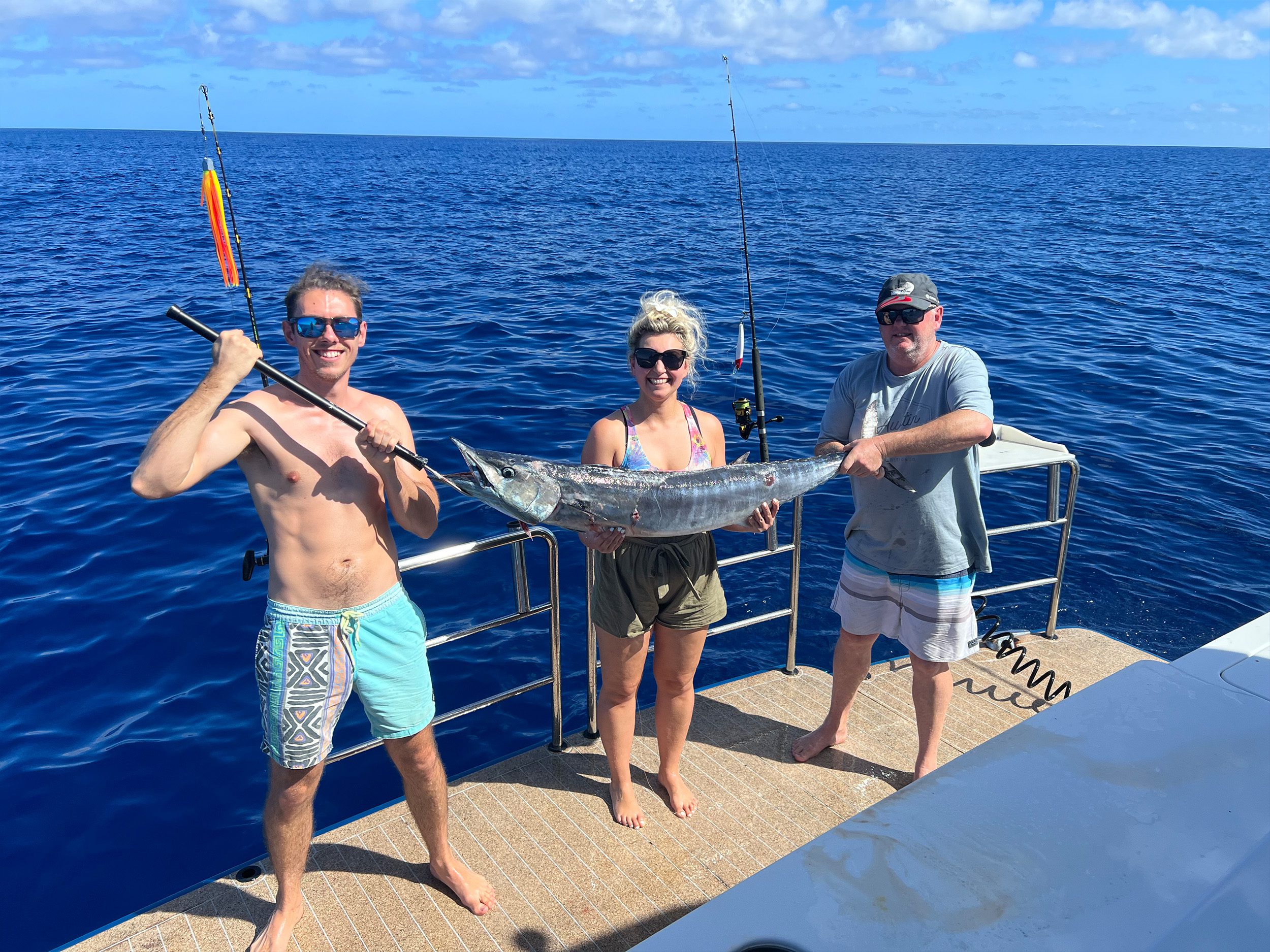
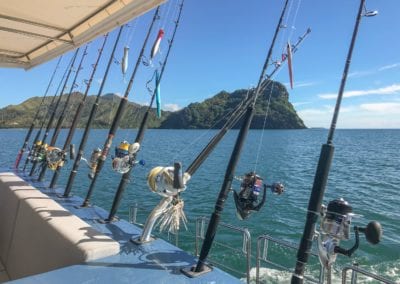
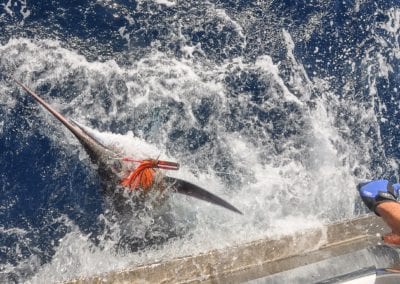
Conditions were perfect: no wind, barely any swell. We put out a couple of trolling lines with Rapalas, and soon enough, Viv had a hit. After a spirited fight, she landed a good-sized wahoo – gleaming silver and strong. We kept trolling northward, up the outer reef, then wound through the islands to Naviti and Drawaqa.
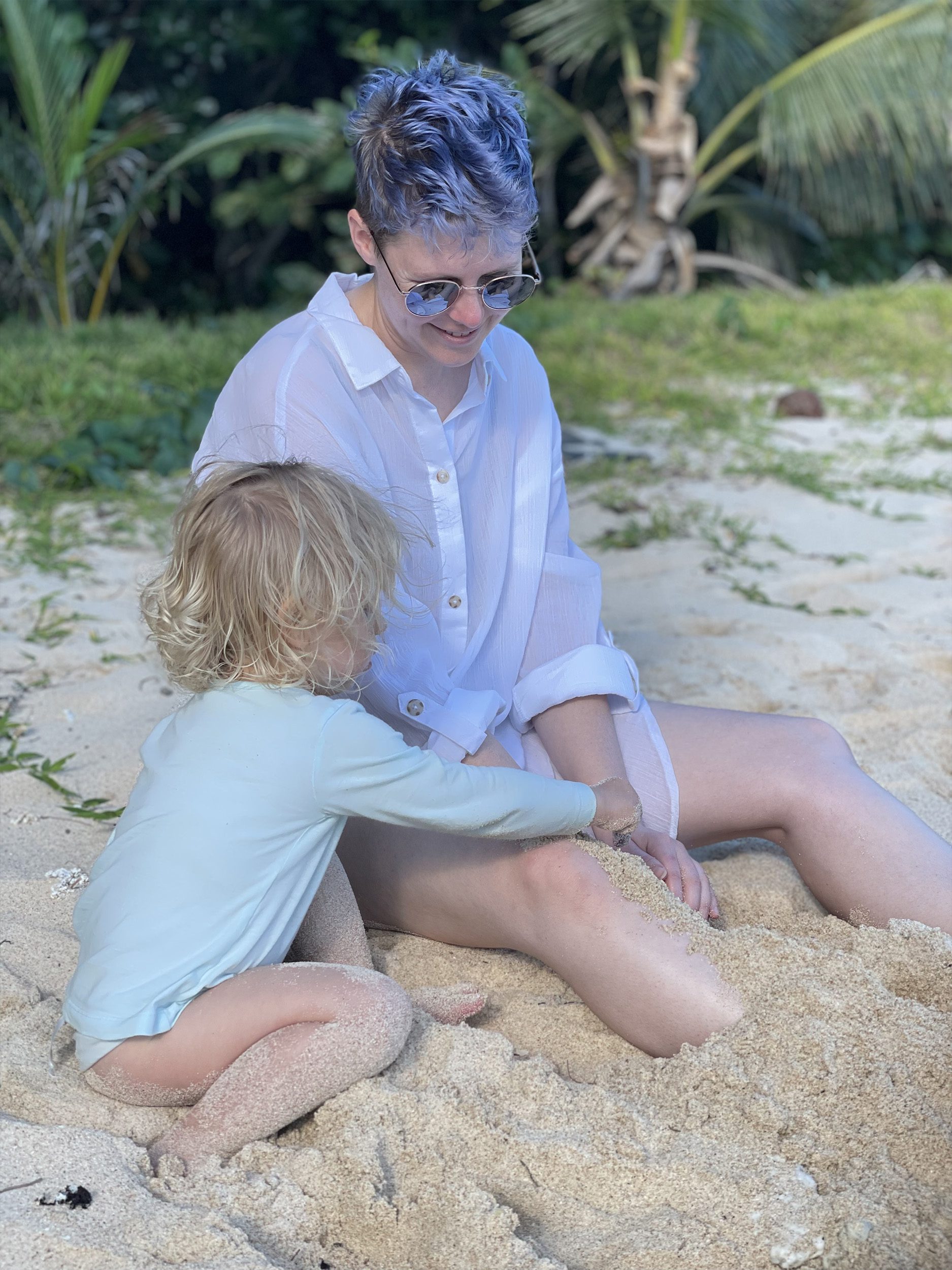
We found a quiet, sheltered bay to anchor in, where the lush jungle flows down the hills to the sea and a freshwater stream snakes through palms onto the sand. Elyse and Viv spent the afternoon building sandcastles while the rest of us wandered the beach, returning with fresh coconuts and natural trinkets to amuse Elyse. Later, a warm tropical downpour swept through – brief and heavy – rinsing the air and painting everything in a golden mist as sunbeams broke through in scattered shafts of light.
That evening, we grilled the fresh wahoo on the barbecue, the taste of the day’s adventure lingering in every bite. A final swim under a glowing dusk sky rounded off the day.
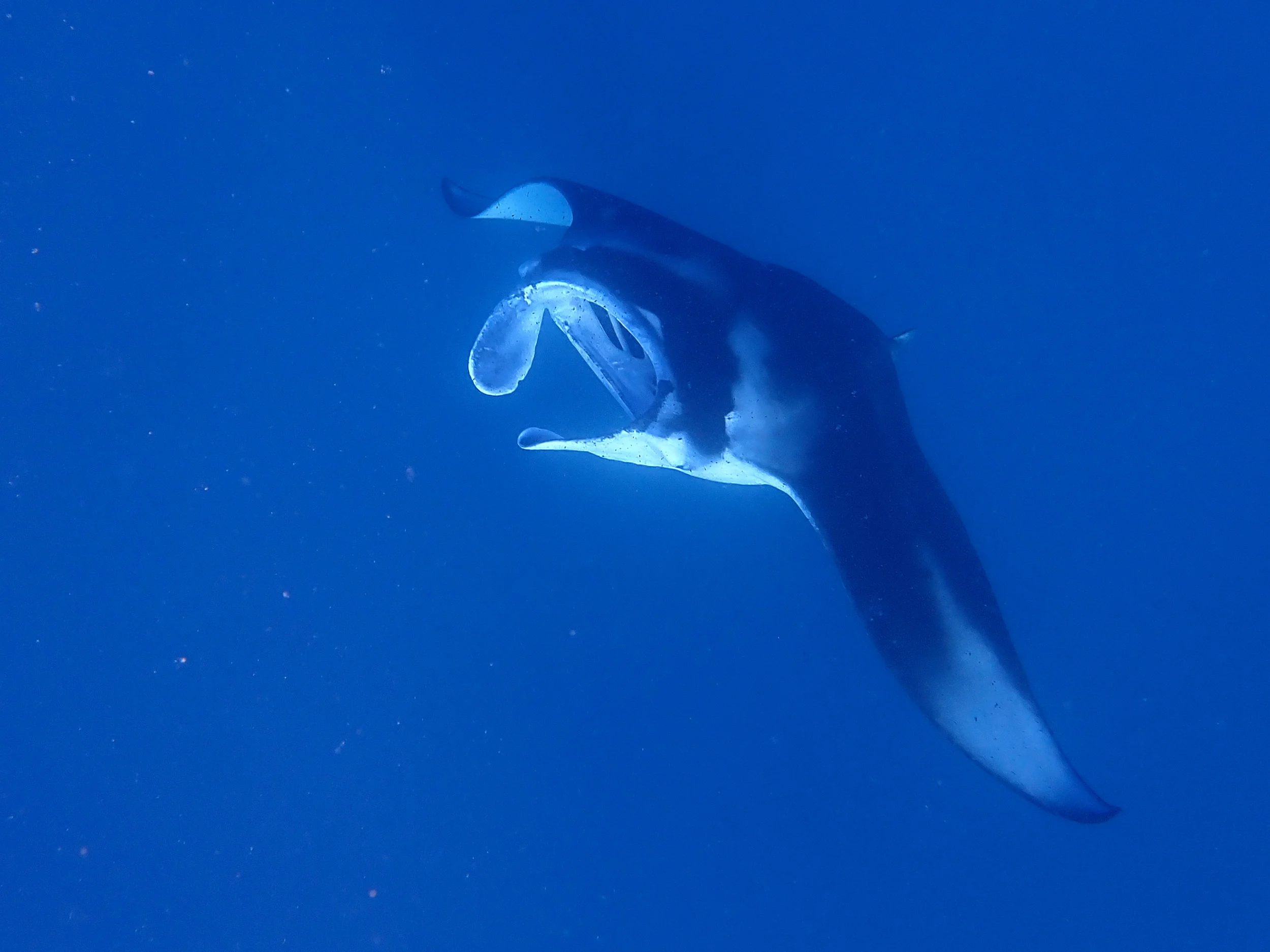
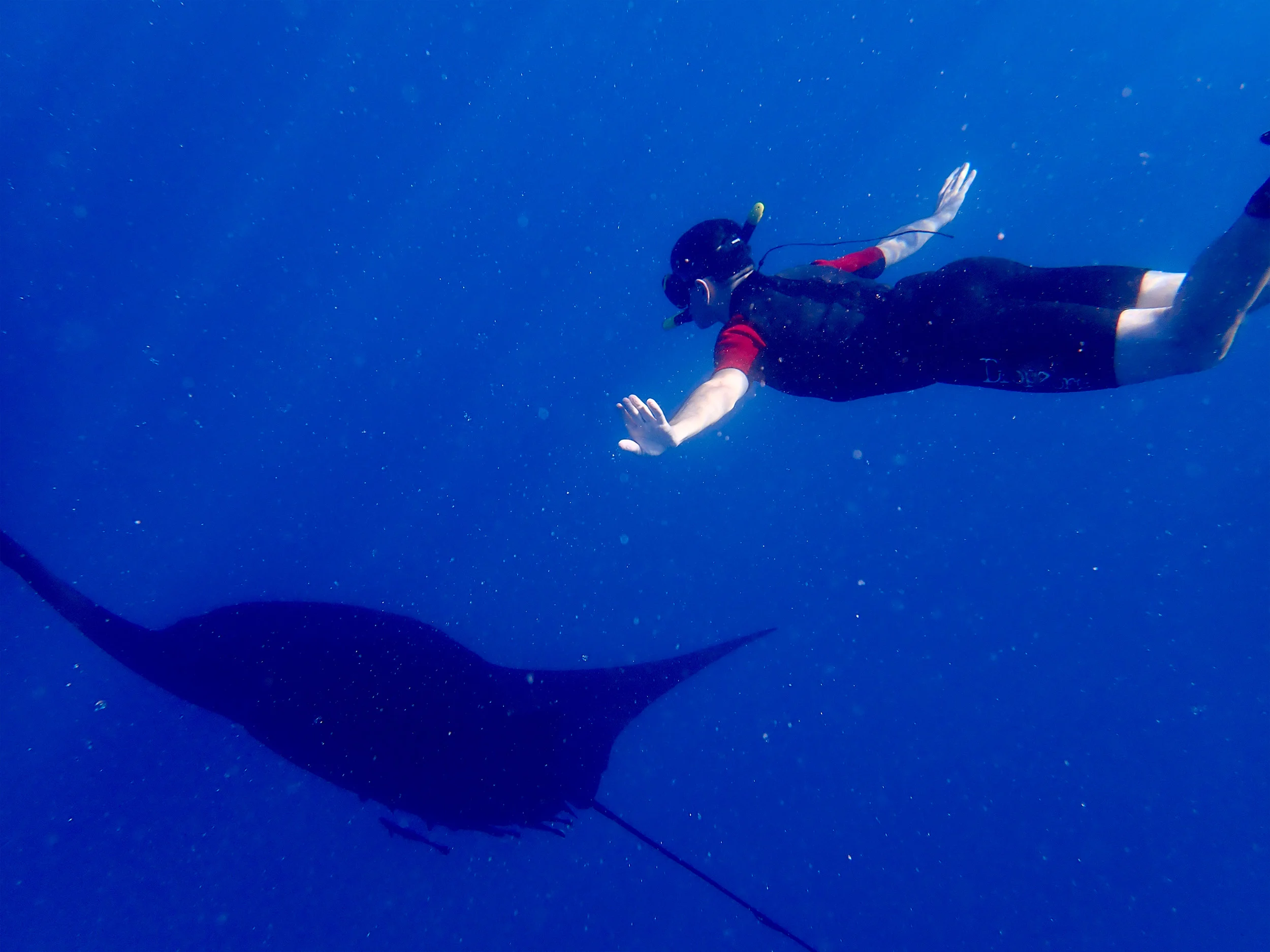
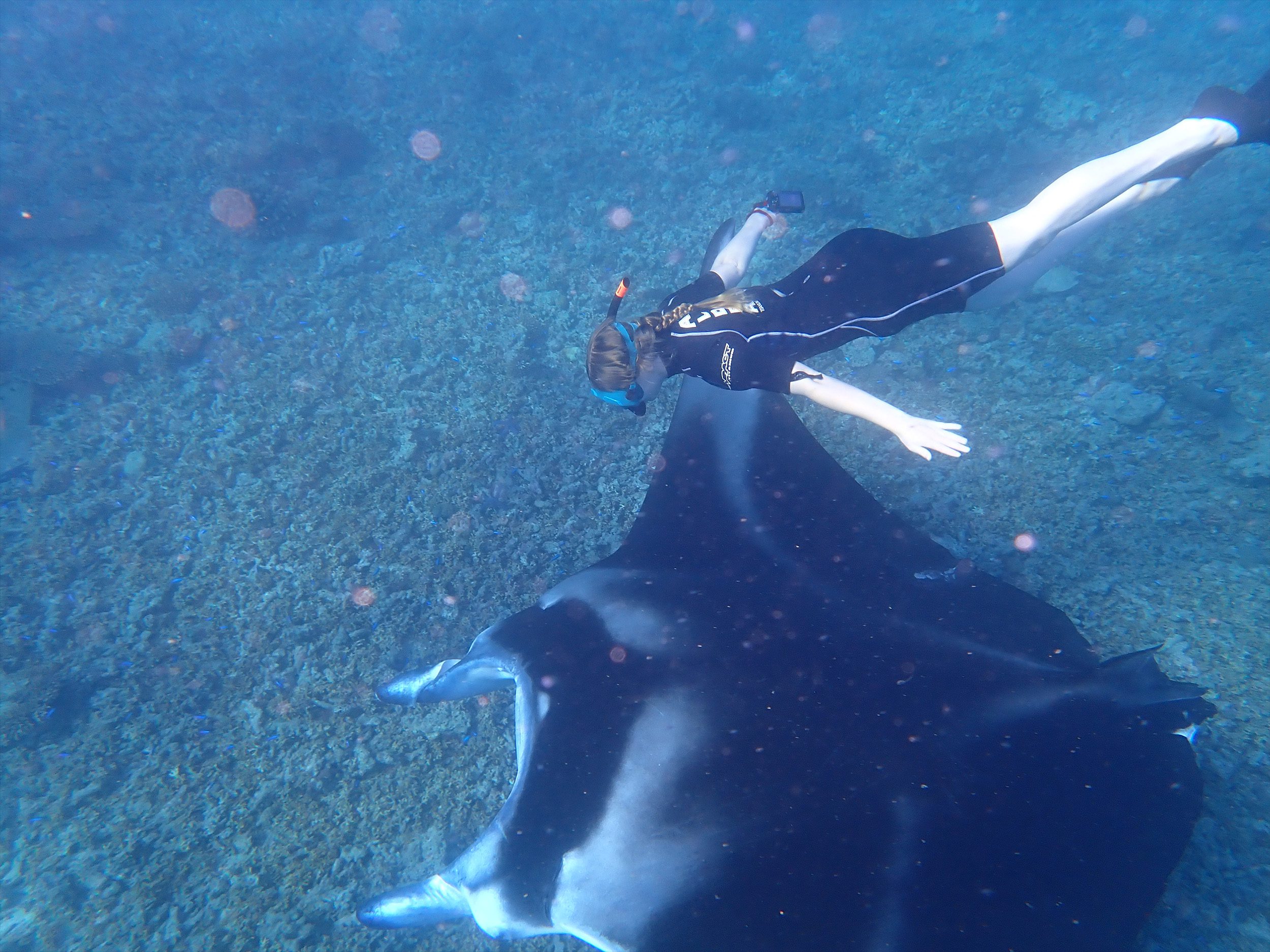
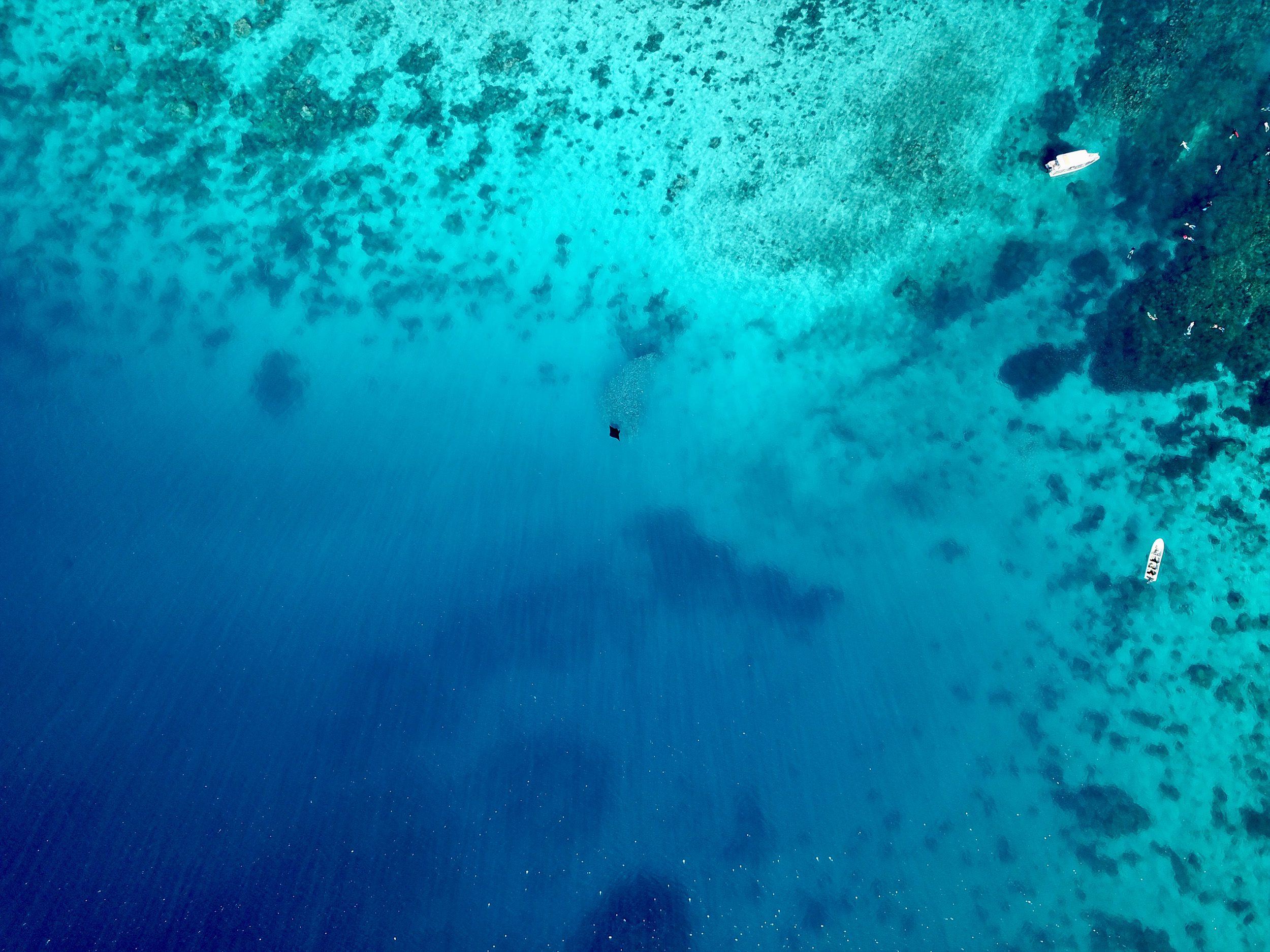
The next morning brought one of the experiences we’d most been hoping for: the chance to swim with manta rays. We had a tropical fruit breakfast, and the more active of us loosened up with yoga on the bow, then ventured out in the tender – everyone excited for what was to come. Just a few hundred metres from our anchorage, a narrow channel cuts between islands – shallow, fast-flowing, and rich with nutrients. During season it becomes a natural feeding ground for giant oceanic manta rays – which can reach up to 7m in wingspan – who return on the tide to feast.
Spotting the first signs near the mouth of the channel we slipped into the water and were immediately greeted with two manta spiralling beneath us – moving with a softness and grace that was almost hypnotic against the azure backdrop.
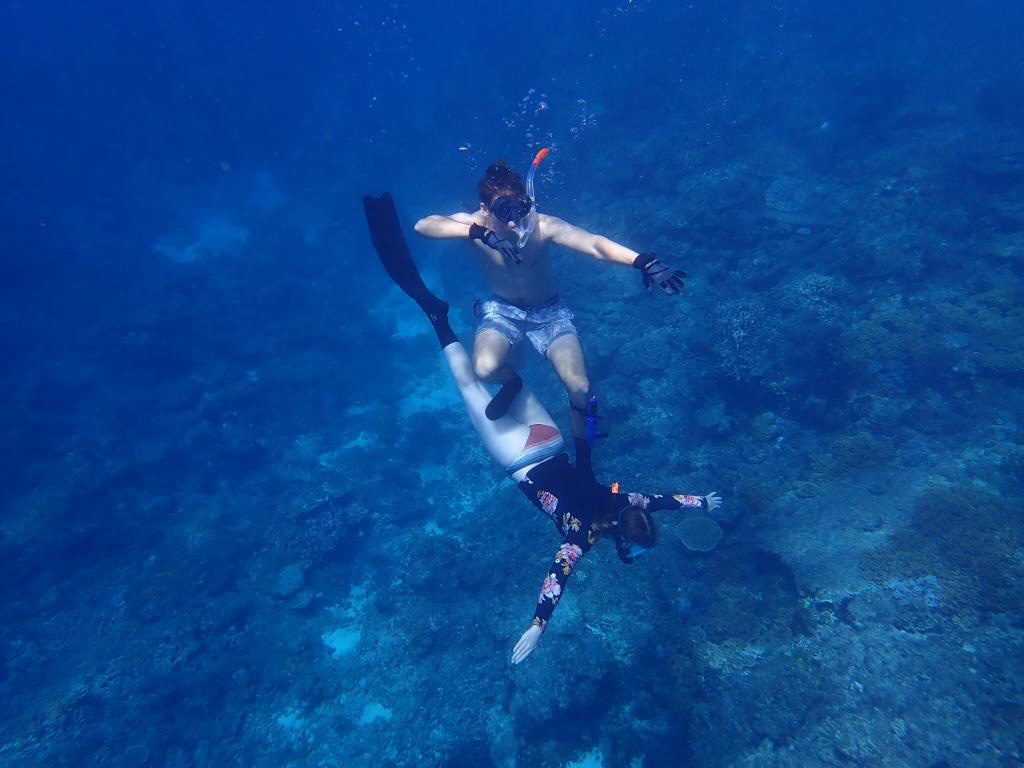
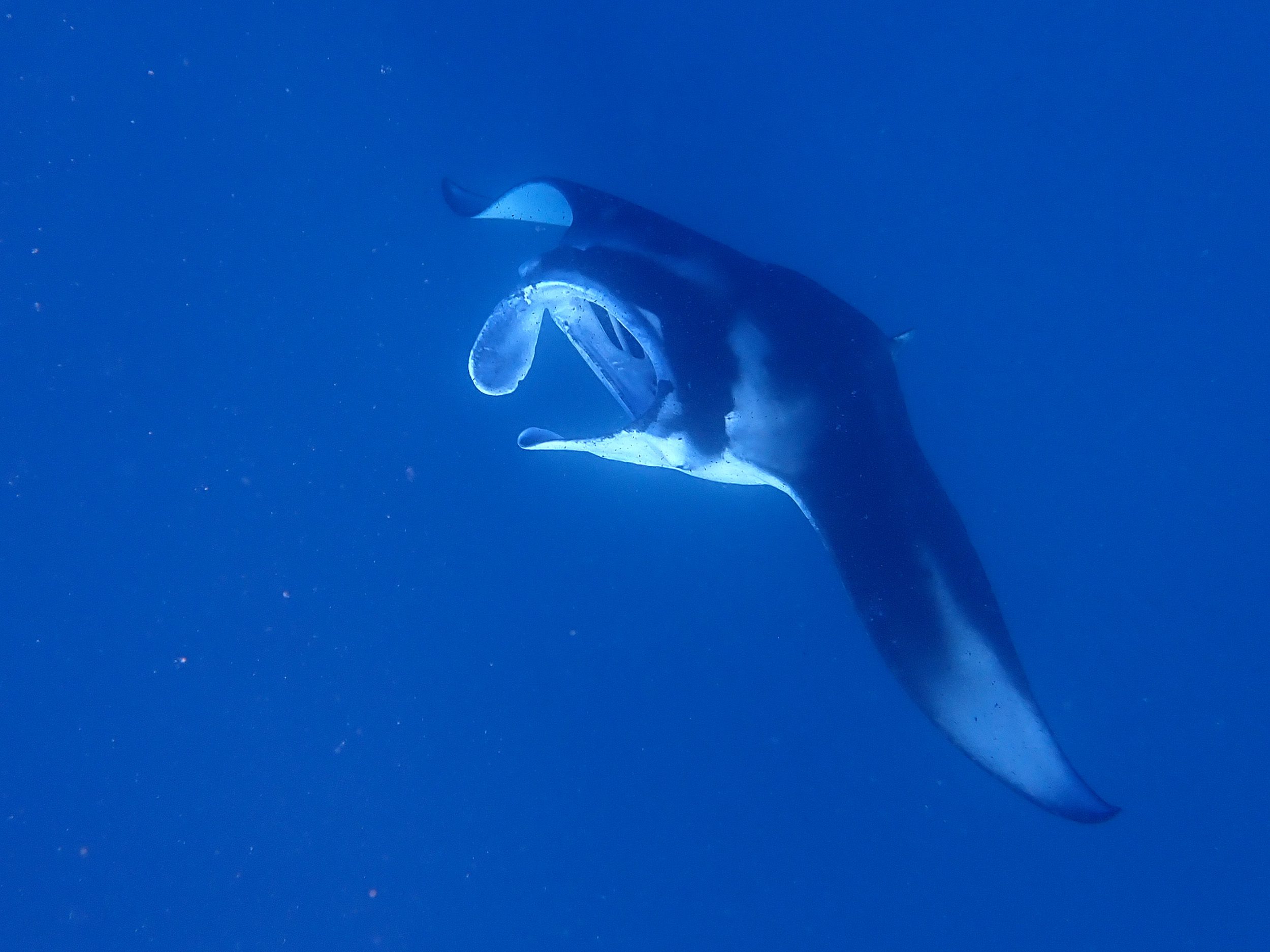
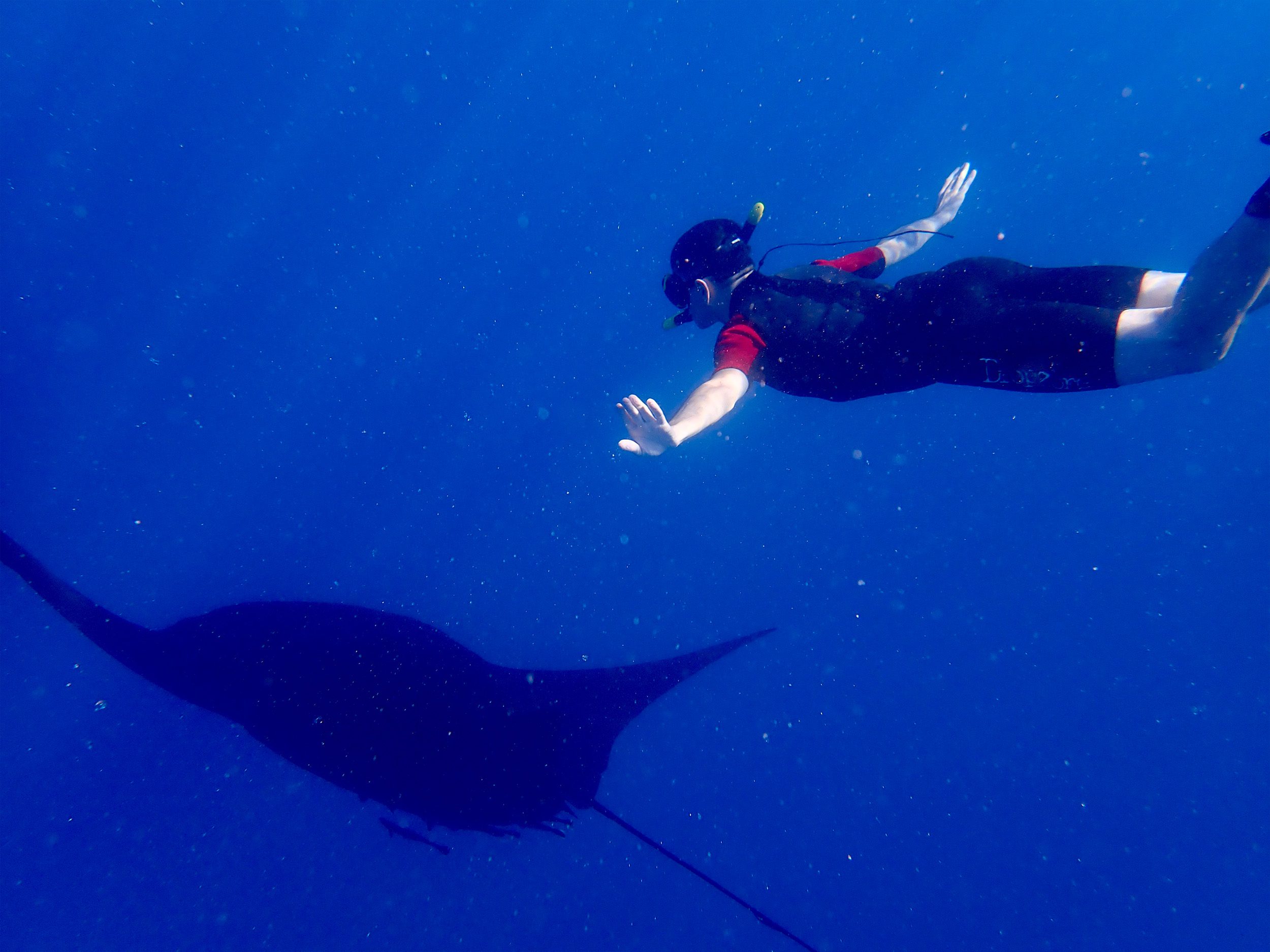
Following their lead we ventured into the top of the pass, a natural corridor bustling with life, and felt the pull of the current carry us while the mantas moved beneath and around us, unbothered by our presence. One ray, larger than the rest, passed within metres of us, its cephalic fins unfurled like a pair of soft horns guiding plankton into its mouth. What was a serious challenge for us keeping our ground against the current was effortless for the oceanic giants who showed their immense strength, giving a single gentle stroke of their wings and taking off as if the current was non-existent. Releasing our fight, we filled our lungs, dove and released ourselves to the oceans flow. The current carried us along the vibrant coral gardens, through streams of fish following an intricate network of invisible highways, a symphony of movement and colour. As we resurfaced the tender swung in to collect us and take us back through the pass to where the manta were now gathering.
Re-entering the water we found 6 manta ray in below, including one particularly large and old manta, its scarred skin a tapestry of its long journey. We dove deep, eager to witness their twirling ballet up close, and were offered the magical opportunity to take part. Time and the world above the surface faded into insignificance as we spread our arms and flew with these gentle giants, close but not touching, sharing an unforgettable moment of harmony.
We stayed until the manta’s food moved into deeper water then headed back to the boat, elated. Half of our group returned to the boat, the others continued snorkelling along the reef where, surrounded by the teeming life of the coral reef, they completed the mornings adventure by swimming with not only the fish and manta rays, but also a turtle.
That night, under a sky crowded with stars, we toasted the day and the ocean for giving us something unforgettable. Sharing our tales we knew we had experienced something truly extraordinary, and that the memories of that magical encounter were indelibly etched into our minds.
Refreshed after a good sleep we explored the surrounding islands and came across another XF60 and decided to travel together. Naturally a drag race ensued on route to our lunch spot, weaving around each other at 40 knots.
Throughout the afternoon we wound our way together north through the islands and passes of the central Yasawas. The scenery remained stunning: steep volcanic islands rising abruptly from the sea, their green flanks stitched with goat tracks and crowned with jagged ridgelines. Occasionally, we’d see smoke curling from village kitchens or a lone fisherman in his boat along the reef. Eventually we settled into the Blue Lagoon, which was to be our home for the next few days.
We woke to still, sapphire water, gently lapping against the hull – anchored in the best spot in the tropical paradise that is the Blue Lagoon. After sharing a warm greeting with the local caretaker who grants Voodoo yachts access to this privileged location, we all but stepped from the back deck directly onto the soft sand.
The next few days blurred together in the best way – sun-soaked, salt-kissed, and full of life. The days unfolded with no rush, no plan, just a rhythm set by the tides and the vibrant setting sun. Stress melted into the sea, replaced by laughter and long swims, the only schedule marked by the cheers of local children as they passed by on their daily boat ride to school.
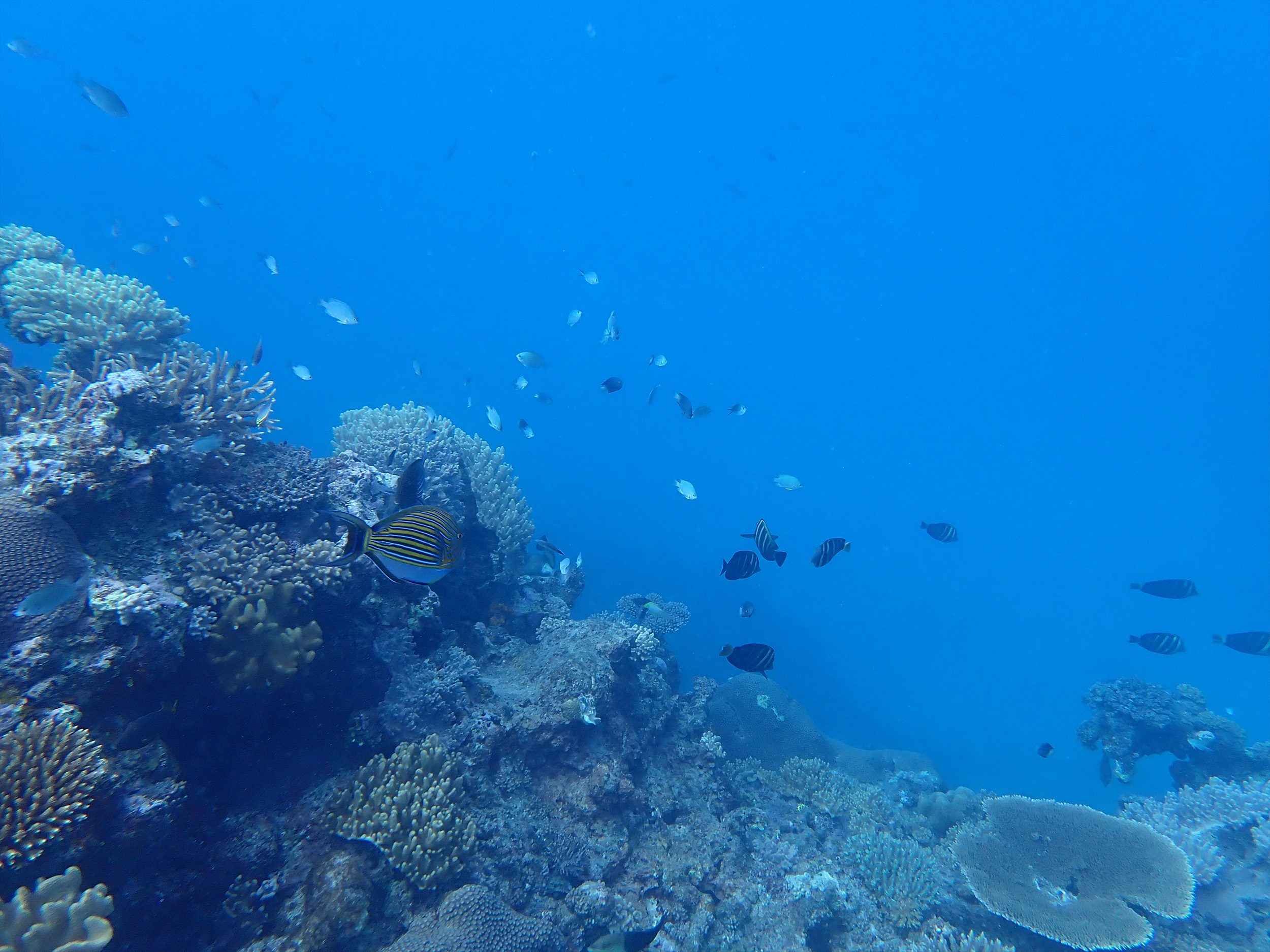
Every day brought simple pleasures: fresh food, summer tunes, good wine, and great company. Just a short swim from the boat, vibrant coral reefs beckoned, teeming with marine life. Mornings often began with yoga on the aft deck, foredeck, or beach, and the calm bay offered perfect conditions for paddleboarding or wakeboarding behind the jet ski. One especially memorable moment came when one of the family paddleboarded alone at sunset. As the sky blushed pink and the last light danced on the water, chants, singing, and rhythmic drumming began on a neighbouring island across the water from a village starting an evening ritual. With fish still visible under her board and firelight spinning on the shore, she was gifted an intimate window into Fijian culture – pure, unfiltered, and profoundly moving.
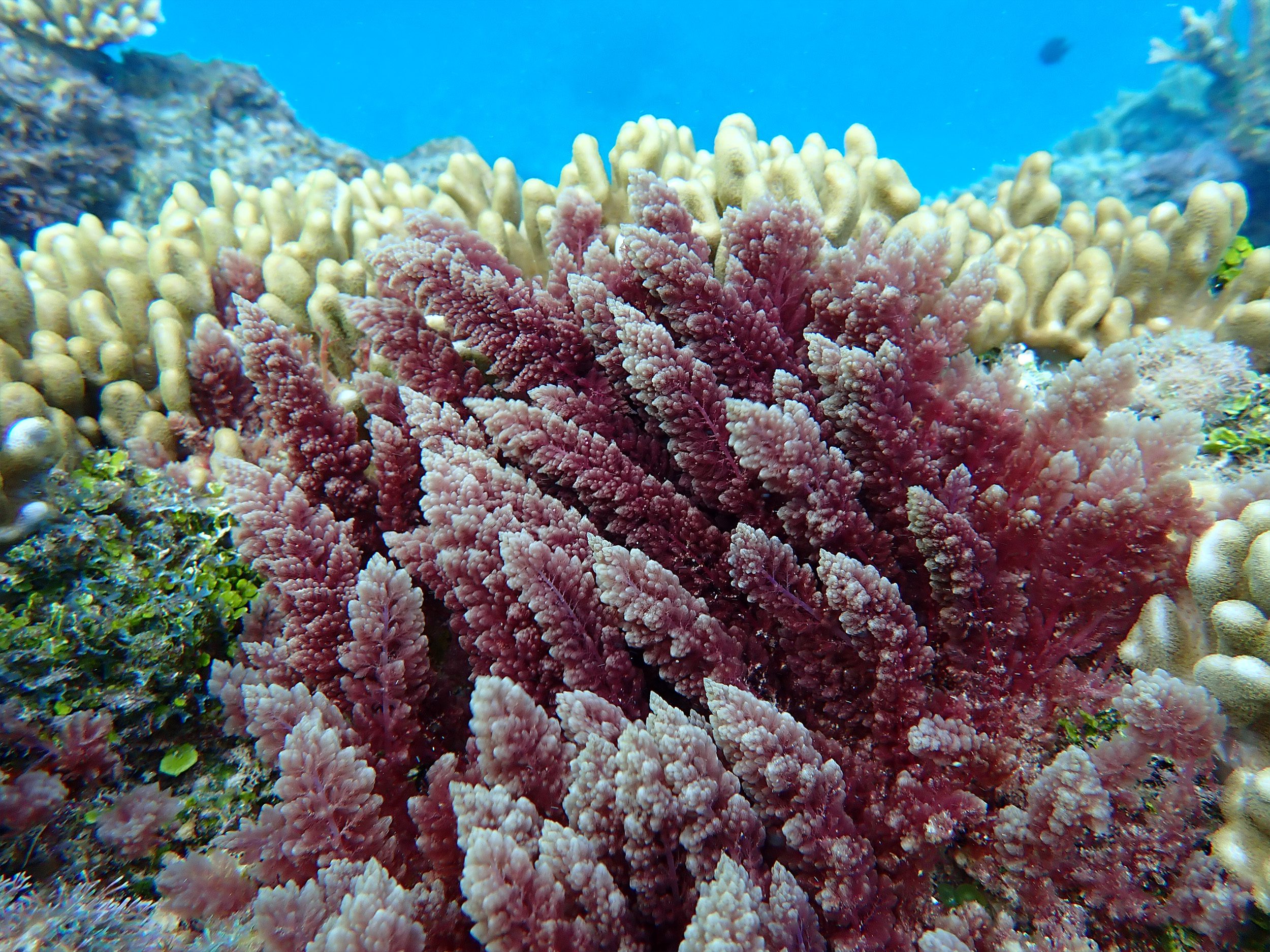
Snorkelling here was something else entirely. We drifted through clouds of multicoloured fish, over nursery reefs, and spotted alien-like nudibranchs. In rare and mesmerising encounters, we even swam with schooling cuttlefish – behaviour only recently observed by scientists, initially in Japan, as cuttlefish were previously believed to be solitary animals.
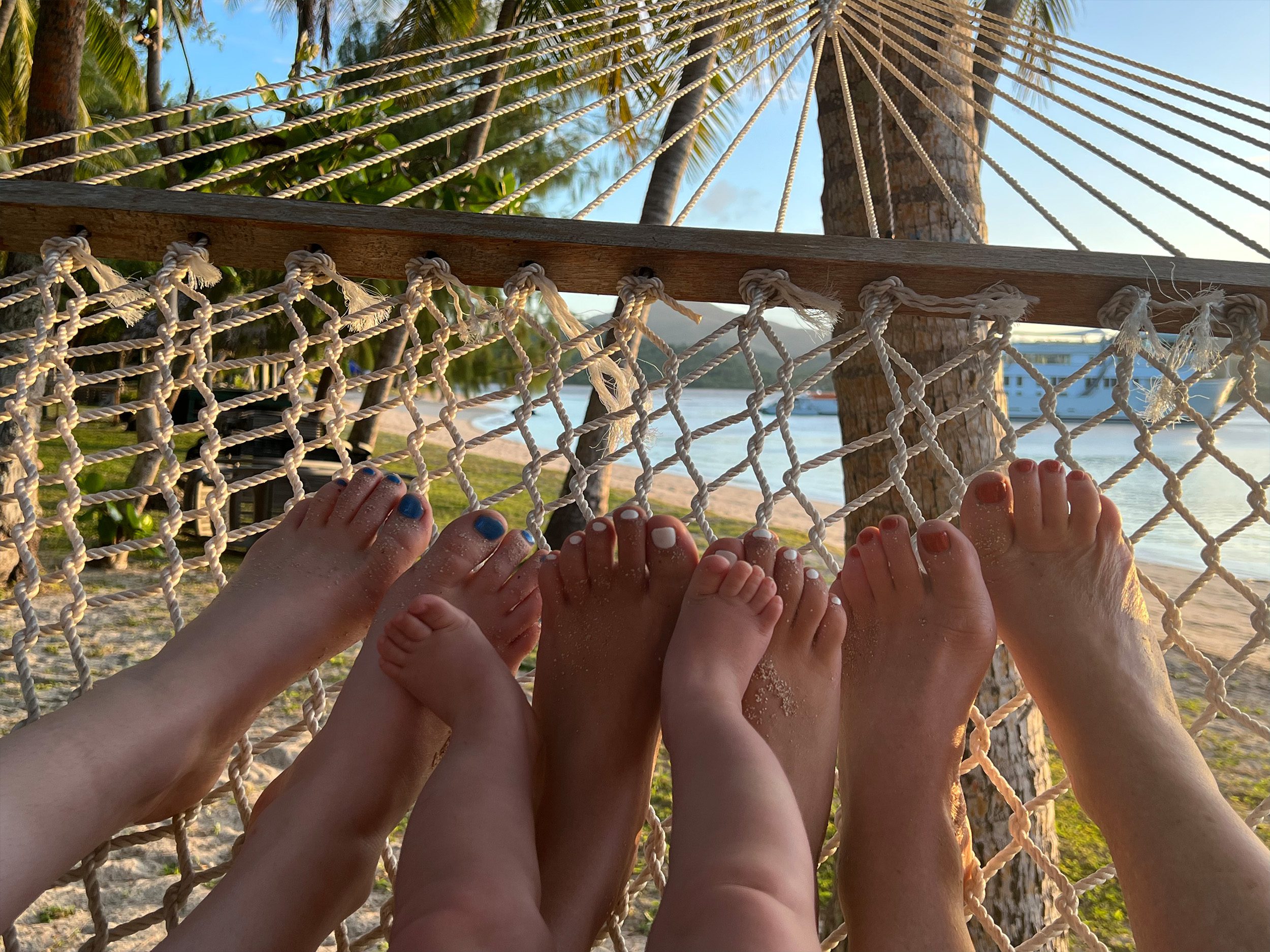
A long sandy beach stretched out in front of the boat, flanked by swaying palms and dotted with hammocks. We wandered barefoot up to the small village store each morning in hopes of catching a loaf of their highly recommended but elusive banana bread – their backing schedule was definitely on ‘island time’. On our final day, we were in luck – still warm from the oven, and every bit worth the wait.
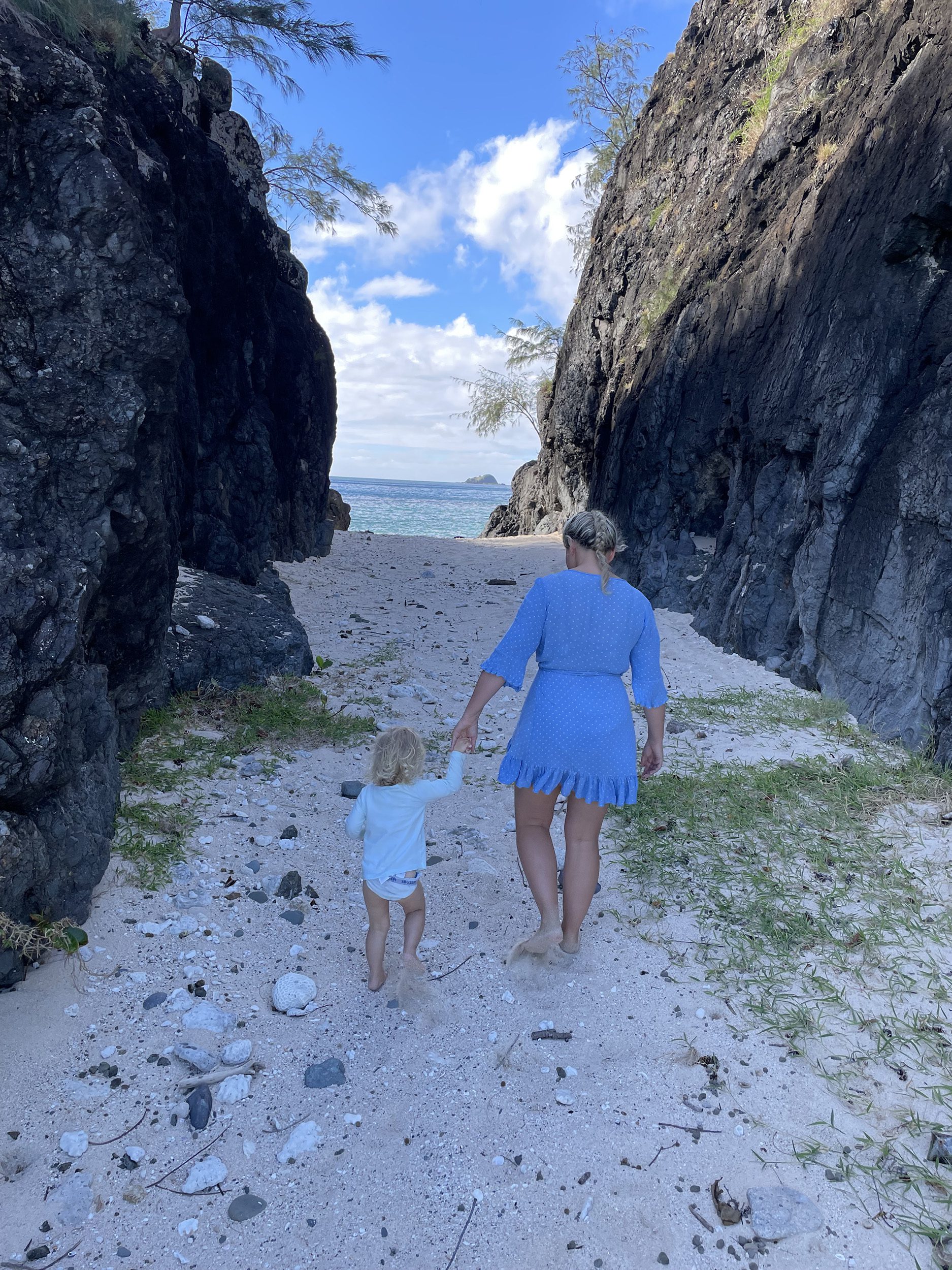
Young Elyse delighted in playing on the beach and in the shallows with the family and locals, learning about the creatures that share the sea and the shore, her loud laughter carrying up and down the beach and out into the bay. It was a special joy to see her encounter tropical fish for the first time, as she swam in a floatie with a plethora of fish swirling around her legs.
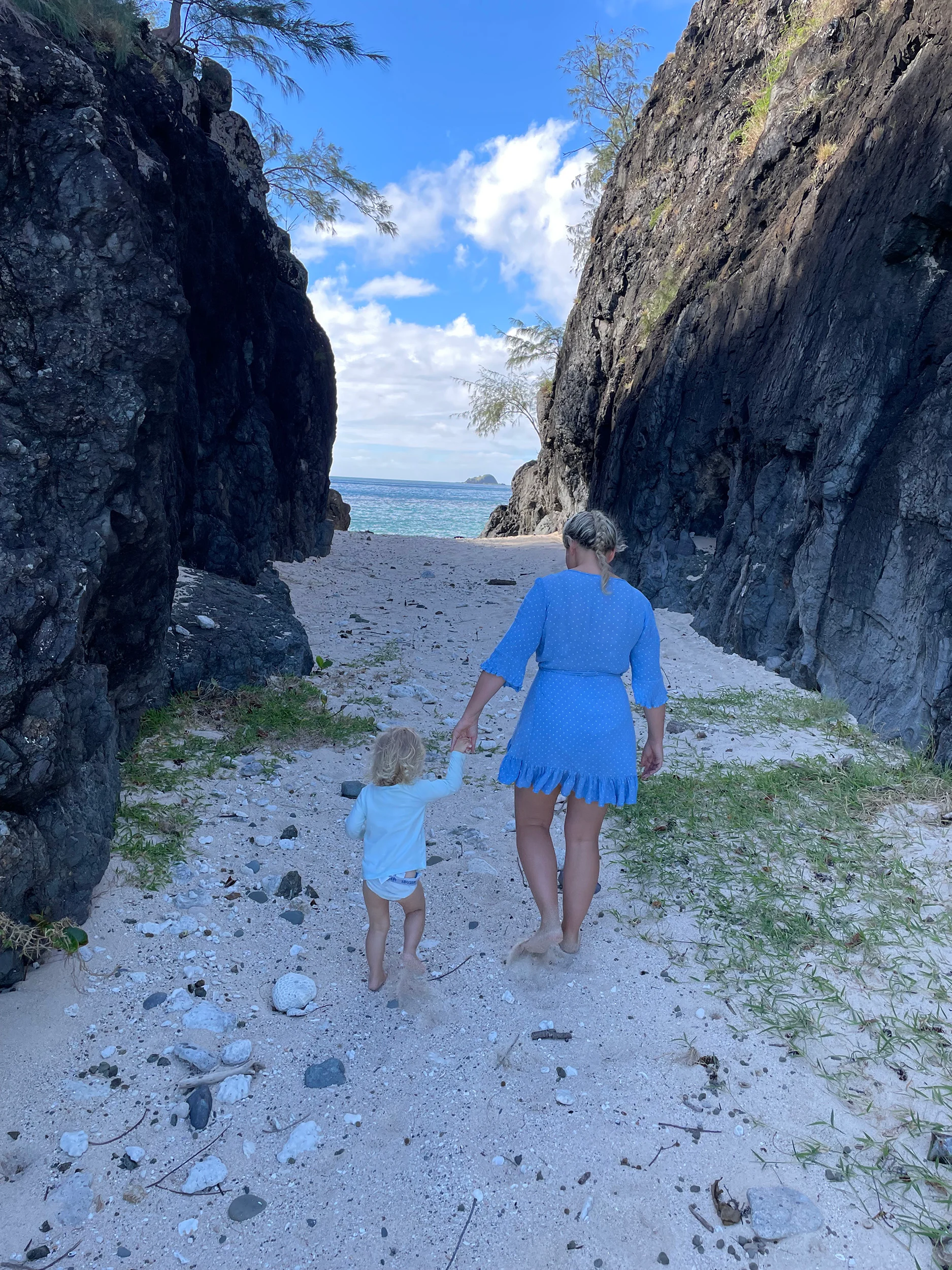
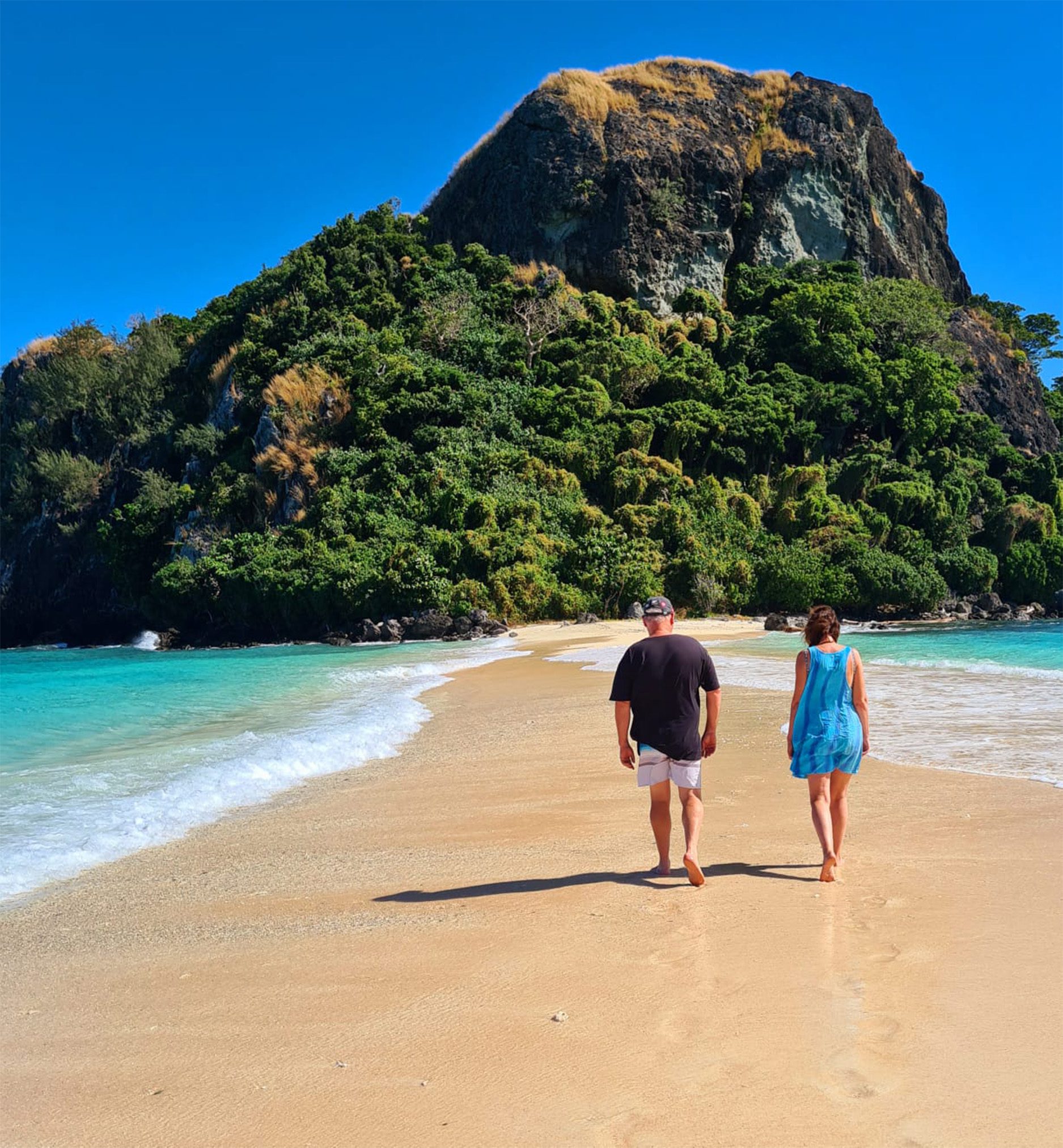
For those who felt like exploring a bit further afield, we set off one afternoon to find Lo’s Teahouse – in search of the best fresh-cooked doughnuts in the Yasawas. Following a subtle, narrow bush path across the island, we paused at the top of the hill to admire the view below: reefs glowing beneath the water, forests climbing the hills, and beaches curling like white ribbons. When we turned to continue, a small, tawny dog had appeared on the trail behind us. It looked up, gave a solemn nod, then trotted ahead. Rounding a bend just ahead of us, the dog had disappeared, and we continued alone through the long grasses. At the next fork in the path, it waited, and as we approached, nodded again, and led us onward.
The dog – soon dubbed “Spirit” – guided us for half an hour through tall grass and coconut palms blowing in the cool trade winds. Often disappearing, Spirit would always reappear waiting at forks or when the path disappeared, always showing the way. Finally, we arrived at a tiny bay where Lo’s Teahouse sat perched on a hill above the water. Lo and her family welcomed us with warm smiles, fresh doughnuts, and icy lemonade. When we asked about the dog, they exchanged glances, shrugged, and said no such animal lived nearby.
Bidding our hosts vinaka vakalevu, we chose a different route home. Climbing the hill, we found Spirit waiting once again. We laughed and asked aloud if it would take us home. The dog cocked its head, gave one final nod, and turned down a new, hidden path. This time we descended through lush forest, into a long field of tall palms, and suddenly emerged – almost magically – onto the beach directly in front of our boat. Spirit stepped into the shallows, gave a low howl, then turned and vanished into the trees.
A curious experience indeed – but somehow perfectly at home in a place where magic seems to walk alongside the everyday.
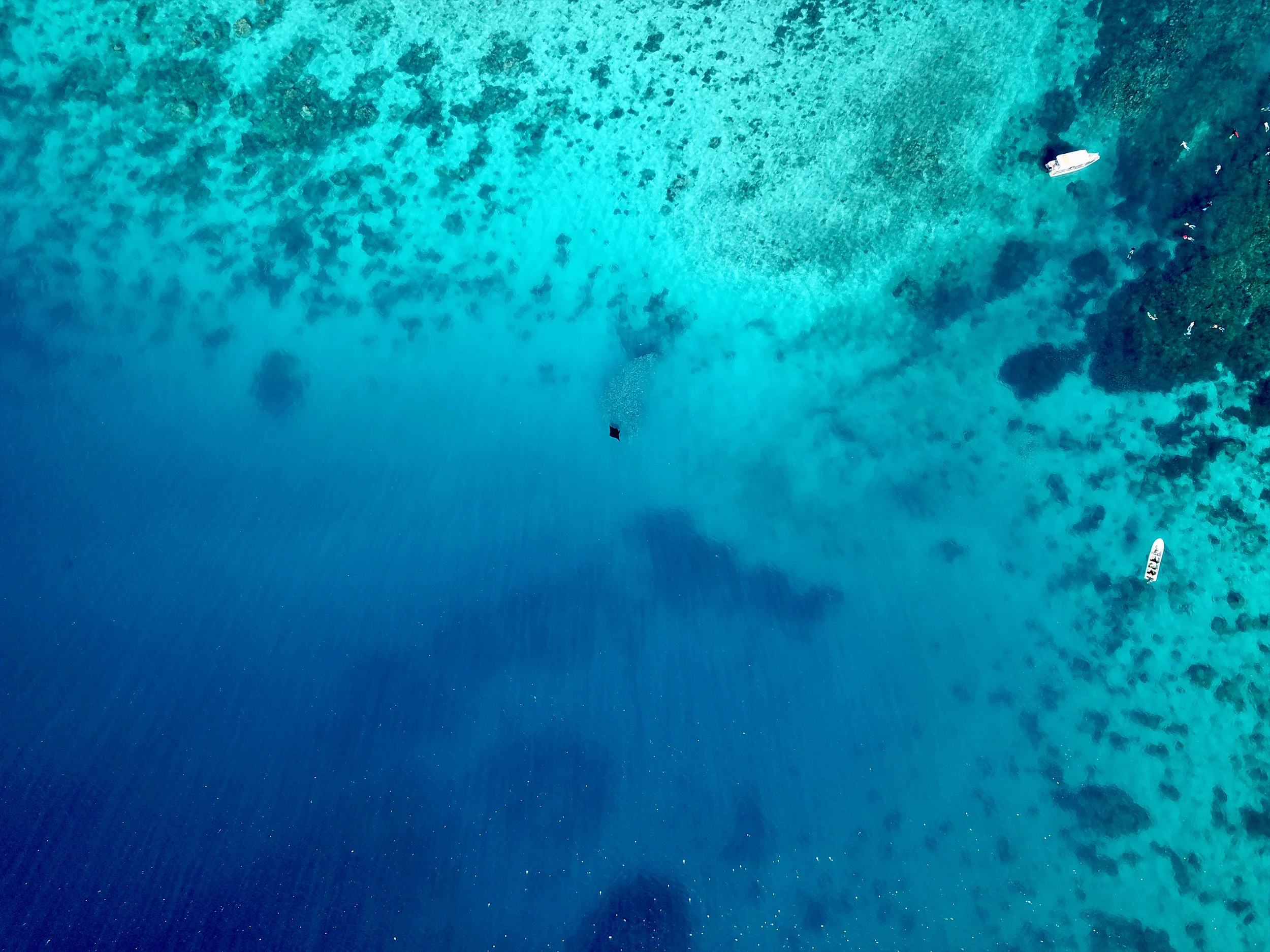
It was hard to pull ourselves away from the Blue Lagoon’s spell, but new wonders waited to the south, so we set off through the Yasawas into the Mamanucas. Our first stop was to snorkel at a reef with sensational water clarity and life. Two of our group discovered an enormous bait ball: a living cloud of fish, liquid silver, shifting and pulsing like one enormous creature. Slipping into the water, they were soon enveloped—at the centre of a shimmering, whirling sphere, the sunlight above casting moving patterns through the dense school. Even from the drone, the fish ball was clearly visible, a dense vortex floating in the deep blue.
Later that afternoon we stopped at Castaway Island. The drone soared ahead as we explored below, diving with playful clownfish hiding in swaying anemones and drifting along the reef wall.
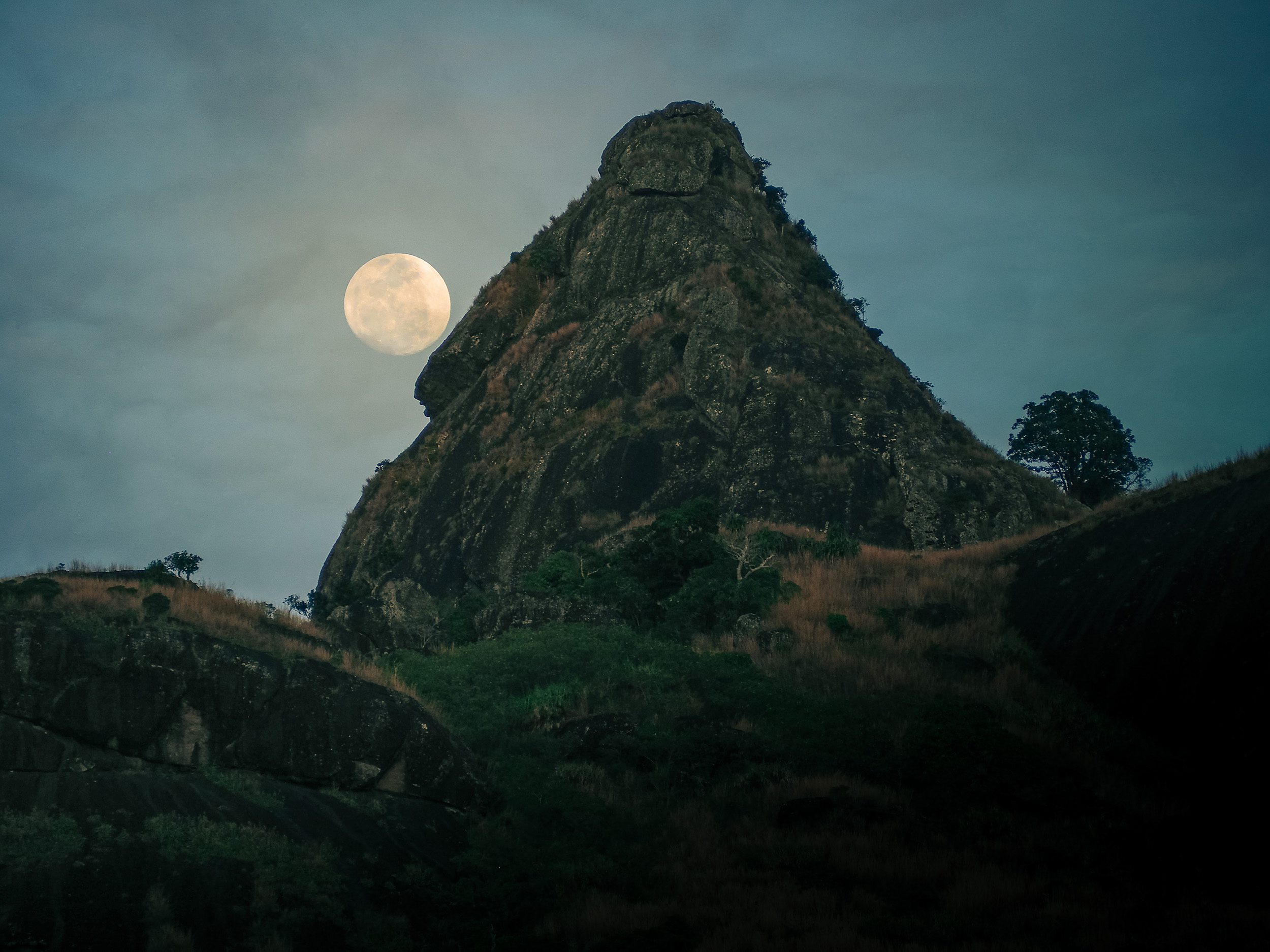
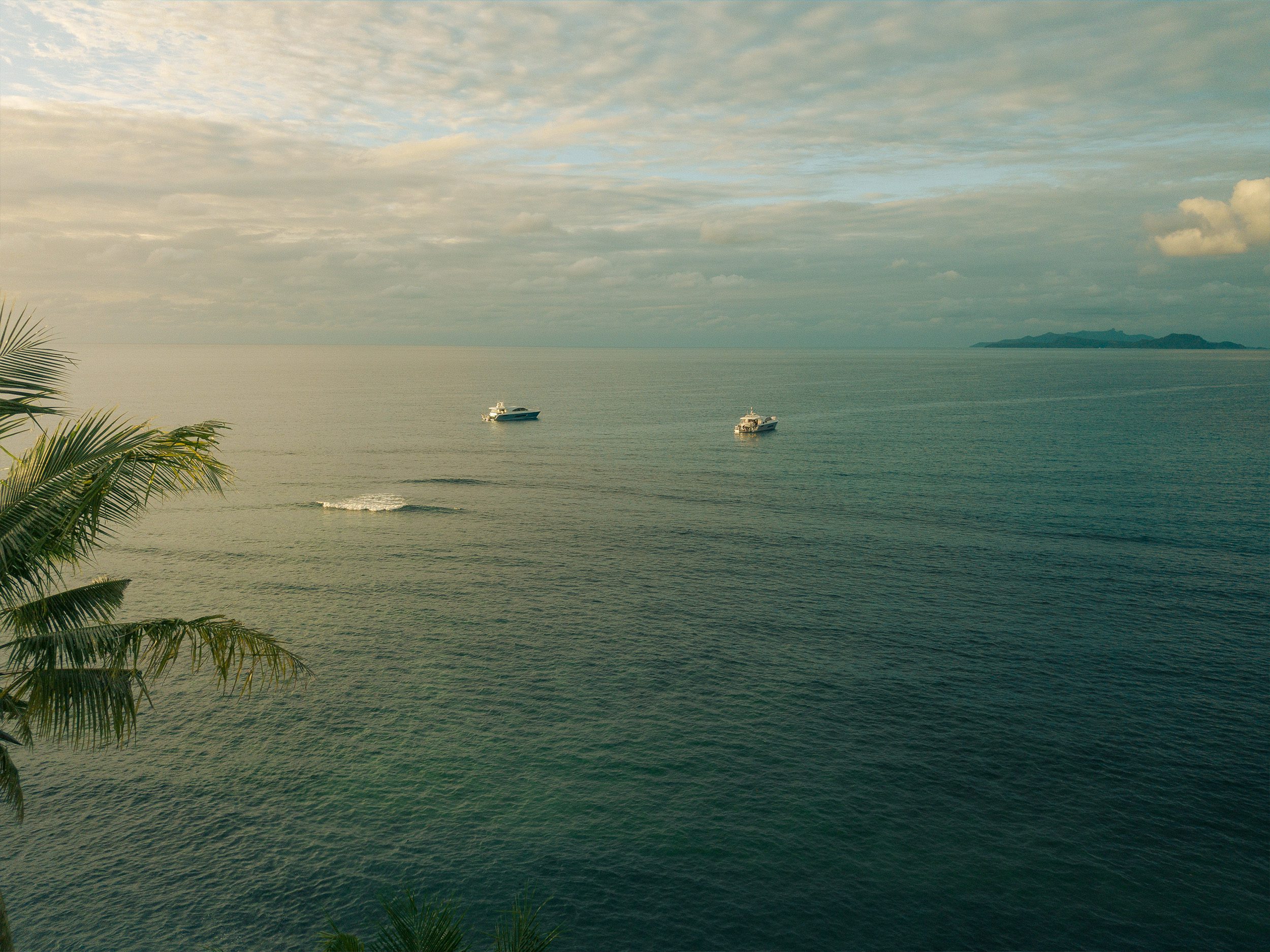
By evening we had settled into the serene anchorage between Malolo and Qalito Islands. The light show began again—sunset in Fiji is seldom a quiet thing. The sky melted from orange into flamingo pink, then deepened to navy and black as the stars emerged in force. The Milky Way spilled across the heavens, mirrored by the sea, Pink Floyd flowed loud while we opened a special bottle to close the day.
Our final morning began slow, as we swam off the back of the boat one last time, surrounded by turquoise water and the faint scent of salt on the breeze. After fresh tropical fruit salad and coffee in the open cockpit, we brought the boat up on plane and carved our way back to Denarau at 34 knots—effortless speed making light work of the distance.
The afternoon passed quietly as we cleaned and headed ashore, sharing final stories and memories over drinks at the marina. Denarau’s shops, cafés, and bars welcomed us back to civilisation, though none of us felt quite ready to return. Packing up was slow and reluctant, like trying to put summer in a suitcase. But as we handed Voodoo back to her owner, sun-kissed and salty, we knew we’d be talking about this trip for years, and carrying the rhythm of the sea and the spirit of the islands home with us.













XF 50
Length (m/ft): 15m / 50ft
Area (m2/ft2): 128m2 / 1378 ft2
Sprint Speed: 37-45knts
Cruising Speed: 30-35knts
Range @ 30knts: 500-1000nm
Range @ 8knts: 1800nm
XF 60
Length (m/ft): 18m / 59ft
Area (m2/ft2): 179m2 / 1926ft2
Sprint Speed: 37-45knts
Cruising Speed: 30-37knts
Range @ 30knts: 600-1150nm
Range @ 8knts: 2500nm
XF 66
Length (m/ft): 20m / 66ft
Area (m2/ft2): 236m2 / 2540ft2
Sprint Speed: 37-45knts
Cruising Speed: 30-37knts
Range @ 30knts: 600-1200nm
Range @ 8knts: 3000nm
XF 75
Length (m/ft): 22.8m / 75ft
Area (m2/ft2): 275m2 / 2960ft2
Sprint Speed: 37-45knts
Cruising Speed: 30-37knts
Range @ 30knts: 600-1200nm
Range @ 8knts: 3000nm
XF 75 OB
Length (m/ft): 22.8m / 75ft
Area (m2/ft2): 317m2 / 3400ft2
Sprint Speed: 37-45knts
Cruising Speed: 30-37knts
Range @ 30knts: 600-1200nm
Range @ 8knts: 3000nm +
DSF 86
Length (m/ft): 26.2m / 86ft
Area (m2/ft2): 450m2 / 4840ft2
Sprint Speed: 20-23knts
Cruising Speed: 12-18knts
Range @ 18knts: 1150nm +
Range @ 8knts: 4000nm +
XF 95
Length (m/ft): 28.5m / 95ft
Area (m2/ft2): 500m2 / 5400ft2
Sprint Speed: 40knts
Cruising Speed: 30-35knts
Range @ 30knts: 1200nm
Range @ 8knts: 3500nm
XF 450
Length (m/ft): 36.3m / 119ft
Gross Tonnage: 450GT
Sprint Speed: 40knts
Cruising Speed: 25-30knts
Range @ 30knts: 1200nm
Range @ 8knts: 4500nm
Go further, faster
Immensely fast and utterly luxurious Voodoo yachts are the perfect high-speed vessels for the modern explorer. Utilising a unique foil-assisted catamaran hull the Voodoo is capable of cruising at speeds in excess of 40knts with genuine offshore passage making range.
Talk further at welcome@voodooyachts.com